

 Business License
Blog Categories

Welded Wire Mesh Machines for Construction Rebar Cages: Applications in Building and Infrastructure
A few years ago, a contractor on a highway overpass project in Southeast Asia discovered that hand-tied reinforcement cages were consuming 40% of his steel crew's working hours. Delays on cage assembly pushed the deck pour back by three weeks, and the project absorbed roughly $60,000 in idle crane time. The solution was not more steelworkers but a welded wire mesh machine producing prefabricated mesh sheets and cage panels off-site, cutting on-site assembly time by more than half and eliminating the variability that hand-tied spacing always introduces.
Construction is the largest and most demanding market for welded wire mesh. The product appears in concrete slabs, walls, foundations, bridge decks, tunnel linings, and precast elements — anywhere steel reinforcement must be positioned accurately and consistently. For fabricators, this market rewards equipment that welds heavy wire at tight tolerances and holds up under continuous production. Understanding how a welded wire mesh machine fits into construction workflows helps both fabricators and contractors source the right equipment and specify the right products.
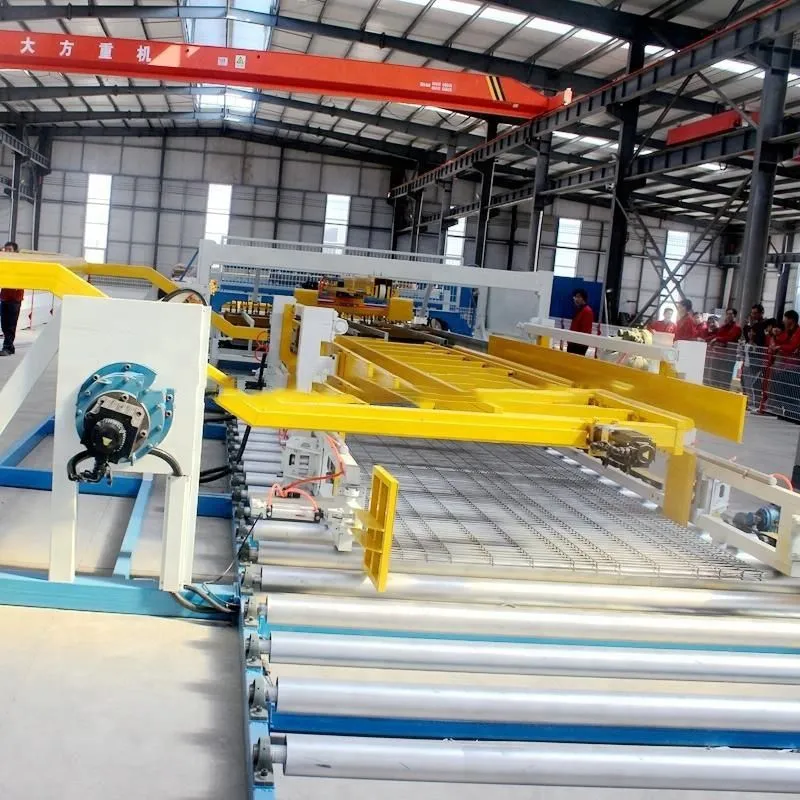
1. Why Construction Demands a Dedicated Welded Wire Mesh Machine
Construction-grade mesh differs from fencing or shelving mesh in three ways: heavier wire, larger panel sizes, and tighter tolerance requirements. A standard fencing welded wire mesh machine welds wire up to 6 mm; construction work commonly requires 6 to 12 mm cold-drawn or cold-rolled ribbed wire. Panel sizes run 2.0 to 3.0 meters wide and up to 6 meters long, which needs a machine with a wider welding frame and heavier indexing system.
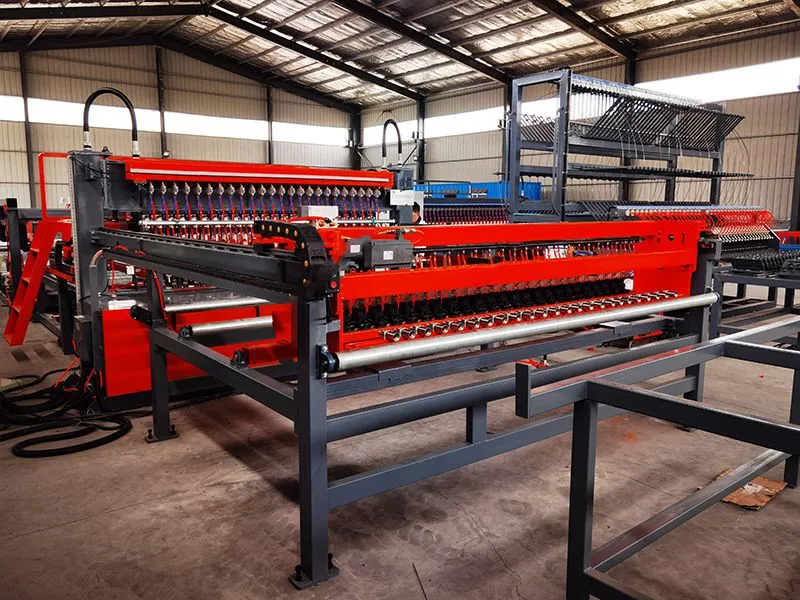
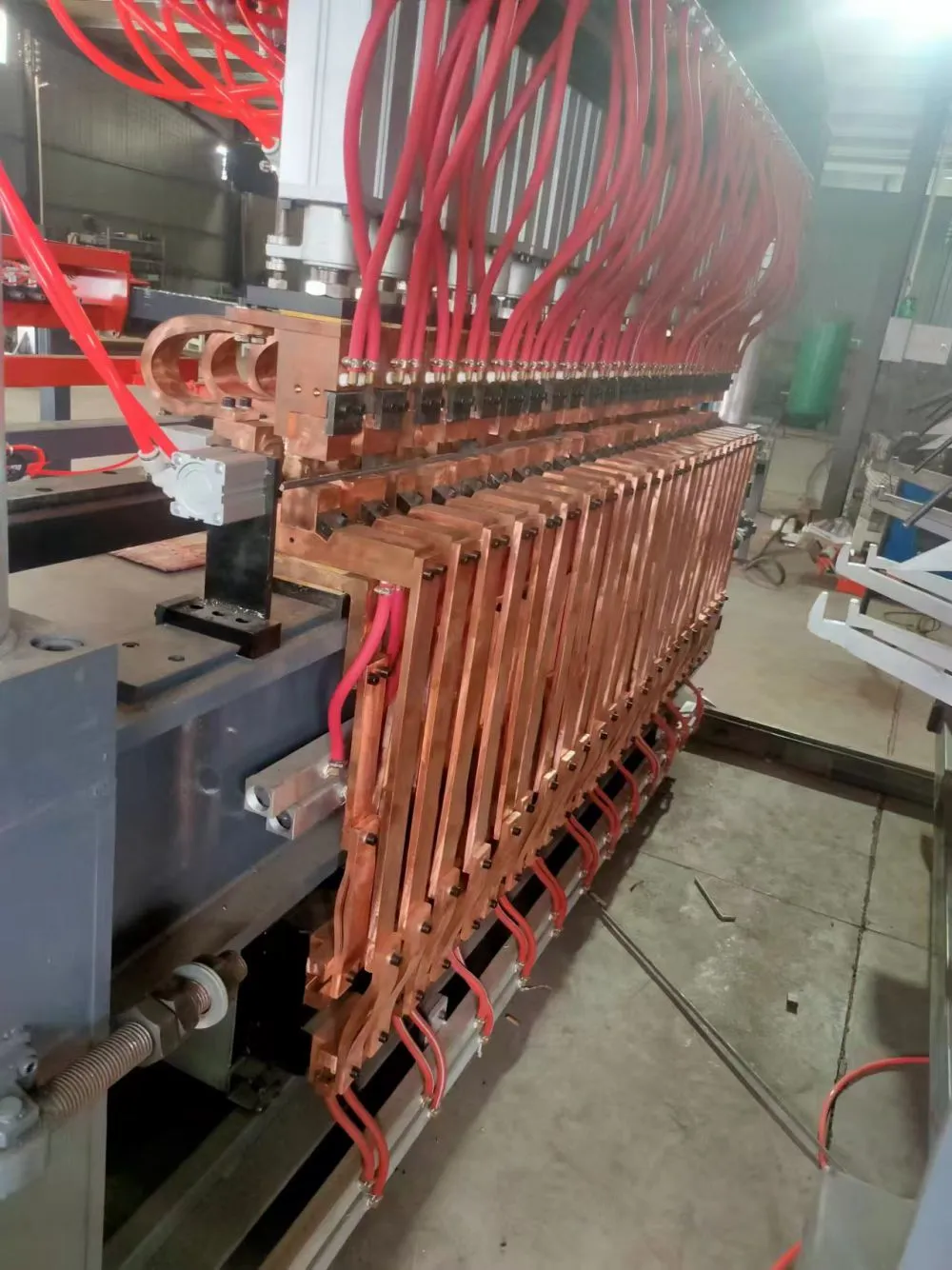
Tolerance matters more in construction than in any other segment. Mesh pitch from a welded wire mesh machine must hold within roughly ±2 mm across a 3-meter panel because reinforcement positioning is a structural requirement, not a cosmetic one. A welded wire mesh machine designed for construction work is therefore built with stiffer frames, heavier transformers, and stronger electrode arms to maintain weld force and pitch accuracy across the full panel width over long production runs.
Construction fabricators also run longer production cycles than fence makers. A single project may require 10,000 to 50,000 identical mesh sheets, which rewards machines with higher duty cycles — typically 50% or more — so the transformer maintains welding temperature without overheating across a full shift. Hebei Jinlongyu Import And Export Trade Co., Ltd. offers construction-configuration welded wire mesh machines with duty cycle ratings and heavy-gauge electrode systems matched to rebar-grade wire.
2. Concrete Reinforcement: How a Welded Wire Mesh Machine Produces Slab and Wall Mesh
Reinforcement mesh for slabs and walls is the highest-volume product in construction. Welded mesh sheets produced on a welded wire mesh machine and placed inside concrete forms take over the tension loads that plain concrete cannot carry, and welded intersections distribute stress across the whole grid rather than concentrating it at individual wire crossings.
A welded wire mesh machine producing slab mesh runs longitudinal wires at typical spacing of 100 to 200 mm and transverse wires at 100 to 300 mm, welding each intersection with current in the range of 15,000 to 40,000 amps depending on wire diameter. Output for construction-grade mesh is lower than for fencing because the weld time per joint is longer — a heavy-duty welded wire mesh machine typically produces 150 to 300 slab sheets per shift, each sheet covering 10 to 18 square meters.
The economic case for welded slab mesh is well established. Compared with hand-tied reinforcement, prefabricated welded mesh from a welded wire mesh machine cuts placement time by roughly 50% to 70%, reduces steel waste from roughly 10% to under 2%, and produces consistent lap and spacing that simplifies quality inspection. For contractors, the saving in on-site labor usually exceeds the premium paid for the prefabricated product.
3. Rebar Cages Produced on a Welded Wire Mesh Machine
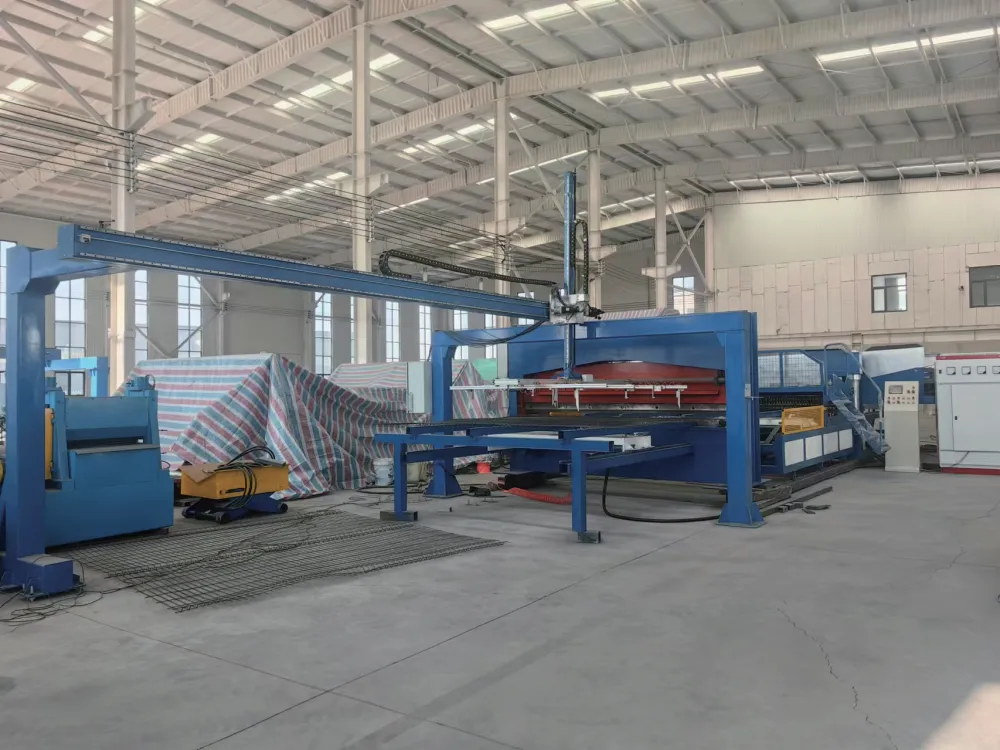
Rebar cages — the cylindrical or rectangular reinforcement skeletons inside columns, piles, and piers — have traditionally been assembled by hand on site. Welded wire mesh machines are changing that workflow by producing flat mesh panels that roll up into cylindrical cages or fold into rectangular ones, replacing hundreds of individually tied intersections with welded joints made in the factory.
The production method starts with a welded wire mesh machine welding a panel with circumferential and longitudinal wire patterns matched to the cage diameter and cover requirements. The panel is then rolled into a cylinder and the longitudinal seams are closed with tie wire or clamps. Cage production rates using prefabricated welded mesh from a welded wire mesh machine typically reach 5 to 10 cages per hour per crew, compared with 1 to 3 cages per hour for hand assembly, and the welded mesh cage holds its geometry better during concrete placement.
Not every welded wire mesh machine can handle cage-grade work. Cage panels for piles and columns typically use 8 to 12 mm longitudinal wire, requiring transformer capacity of 150 to 250 kVA and electrode force ratings above roughly 4,000 N per joint. Jinlongyu Trading supplies cage-production configurations with these heavy-duty specifications and provides rolling mandrels and seam-closing guidance with each line.
4. Infrastructure Applications of Welded Wire Mesh Machines
Infrastructure projects consume welded mesh from welded wire mesh machines in volumes that few other segments match. Bridge decks use mesh sheets across the full deck width as bottom reinforcement; tunnel linings use curved mesh panels in primary and secondary lining; retaining walls and slope stabilization use mesh anchored into the earth; and highway foundations use mesh sheets beneath pavement layers.
The specification demands of infrastructure work are exacting. Bridge deck mesh from a welded wire mesh machine commonly uses 10 to 12 mm wire at 150 mm pitch, and the mesh must maintain flatness so the concrete cover stays uniform. Tunnel segments require curved panels bent to a fixed radius — a capability that some heavy-duty welded wire mesh machine configurations support with integrated bending stations. Project owners in this segment typically require third-party weld strength testing on sampled panels, so fabricators need equipment that produces consistent weld nuggets run after run.
For infrastructure fabricators, reliability is the deciding factor in welded wire mesh machine choice. A failure mid-contract means demurrage on delivered steel, idle crews, and penalty clauses. Most contractors who buy welded wire mesh machines for infrastructure work prioritize duty cycle, transformer quality, and spare part availability over purchase price — and they typically verify these with a factory trial before committing.
5. Building Applications of a Welded Wire Mesh Machine: Columns, Beams, and Precast
In building construction, welded mesh appears in columns and beams as shear reinforcement, in precast elements as both reinforcement and lifting points, and in floor slabs as the main reinforcement. Each application places different demands on the mesh and therefore on the welded wire mesh machine that produces it.
Precast is the fastest-growing building application. Precast panels, hollow-core slabs, and staircase units are cast in factories where welded mesh sheets arrive pre-cut to panel dimensions, eliminating on-site cutting waste. A precast plant typically runs a welded wire mesh machine at 200 to 400 sheets per shift, feeding multiple casting beds. The mesh for precast must hold tight tolerances because the reinforcement position determines whether lifting anchors engage correctly and whether the finished unit meets its design load.
Columns and beams use welded mesh as transverse shear reinforcement, often in the form of spiral or closed-loop cages. While these are frequently produced on dedicated bending machines, flat welded mesh from a welded wire mesh machine serves as the raw material for loop forming. The machine's ability to maintain consistent wire spacing directly determines the uniformity of the shear reinforcement, which is why structural engineers specify mesh pitch tolerances so precisely.
6. Construction Mesh Specification Standards
Construction welded mesh is governed by national and regional standards that define wire diameters, spacing, and weld shear strength. Understanding the applicable standard is essential because it sets the acceptance criteria a welded wire mesh machine must meet.
| Standard | Region | Typical Wire Range | Key Requirement |
|---|---|---|---|
| ASTM A1064 / A185 | United States | 2.0 – 12.5 mm | Weld shear strength per intersection |
| BS 4483 | United Kingdom | 5.0 – 12.0 mm | Spacing tolerance and weld strength classes |
| EN 10080 / EN 10223 | European Union | 4.0 – 12.0 mm | Steel grade and weld performance |
| GB/T 1499.3 | China | 4.0 – 12.0 mm | Ribbed wire and mesh conformity |
| JIS G 3551 | Japan | 4.0 – 10.0 mm | Weld strength and mesh geometry |
Weld shear strength is the acceptance criterion that matters most. Standards typically require the weld at each intersection to resist a shear force equivalent to a defined percentage of the wire's tensile strength — commonly 50% or more in European and North American standards. A welded wire mesh machine producing construction mesh must therefore be set with weld parameters verified against the target standard, and sampled panels tested at a laboratory before large production runs begin.
7. Choosing a Welded Wire Mesh Machine for Construction Work
Selecting construction-grade equipment means specifying the welded wire mesh machine around the heaviest wire and largest panel you intend to produce, not the average. Five parameters define the correct configuration.
First, transformer capacity: 150 to 250 kVA for rebar-grade wire, with a duty cycle of at least 50%. Second, wire diameter range: the machine should handle the full range you plan to run, typically 4 to 12 mm. Third, panel width and length: welding frames of 2.4 to 3.0 meters are standard for construction, with indexing to 6 meters or more. Fourth, electrode force: at least 4,000 N per joint for 10 mm wire.
Fifth, control system: a PLC with recipe memory so weld parameters are stored per mesh specification and recalled without re-entering values.
The company recommends running a factory acceptance test on the exact wire grade and mesh pattern specified for your first project. A sample panel produced on a welded wire mesh machine at the supplier's facility, tested for weld shear strength and pitch tolerance, tells you more about the equipment than any specification sheet. Hebei Jinlongyu Import & Export Trading includes sample-run testing in its acceptance procedure and documents the results with the machine documentation.
8. Quality Control for Construction-Grade Welded Wire Mesh Machine Output
Construction mesh quality control starts at the welded wire mesh machine and continues through the finished panel. Three checks dominate factory practice.
First, weld shear strength testing: joints from the welded wire mesh machine's output are pulled apart under calibrated force, and results are logged against the target standard. Frequency ranges from one panel per batch to one per production hour depending on the project's specification. Second, dimensional inspection: pitch, panel width, and length are measured against tolerance, typically with templates or laser gauges. Third, visual inspection for surface defects such as broken welds, burnt wires, or galvanizing damage — defects that inspection at the construction site rarely catches before placement.
One recent example: a precast manufacturer in East Africa adopted a documented QC routine around its welded wire mesh machine — hourly shear tests, daily dimensional checks, and weekly calibration of weld parameters. Within six months, site rejections on delivered mesh dropped from roughly 8% to under 1%, and the factory passed its first third-party audit without corrective actions. The investment was not in new equipment but in consistent process control around the machine it already owned.
9. Field Cases: Welded Wire Mesh Machines in Real Projects
Two contrasting cases illustrate how construction fabricators use welded wire mesh machines differently depending on their market.
In one case, a bridge contractor in Central Asia bought a heavy-duty welded wire mesh machine rated at 200 kVA to produce deck mesh for three overpass projects running in parallel. The machine produced roughly 180 sheets per shift at 10 mm wire and 150 mm pitch, and the contractor reported that prefabricated mesh cut on-site reinforcement time by approximately 60% compared with tied rebar on the first deck pour. The machine's duty cycle held up through 11-hour shifts across four months of continuous production.
In a second case, a precast panel factory in the Middle East selected a mid-range welded wire mesh machine for hollow-core slab reinforcement at 8 mm wire. Output stabilized at roughly 220 sheets per shift, and the plant eliminated its rebar-cutting scrap line, recovering the equipment investment within 14 months through reduced steel waste alone. Both cases share a common thread: the welded wire mesh machine was sized for the heaviest specification, not the average, and the operators ran documented weld parameters rather than adjusting by feel.
10. Frequently Asked Questions
10.1 What wire diameters does a construction welded wire mesh machine handle?
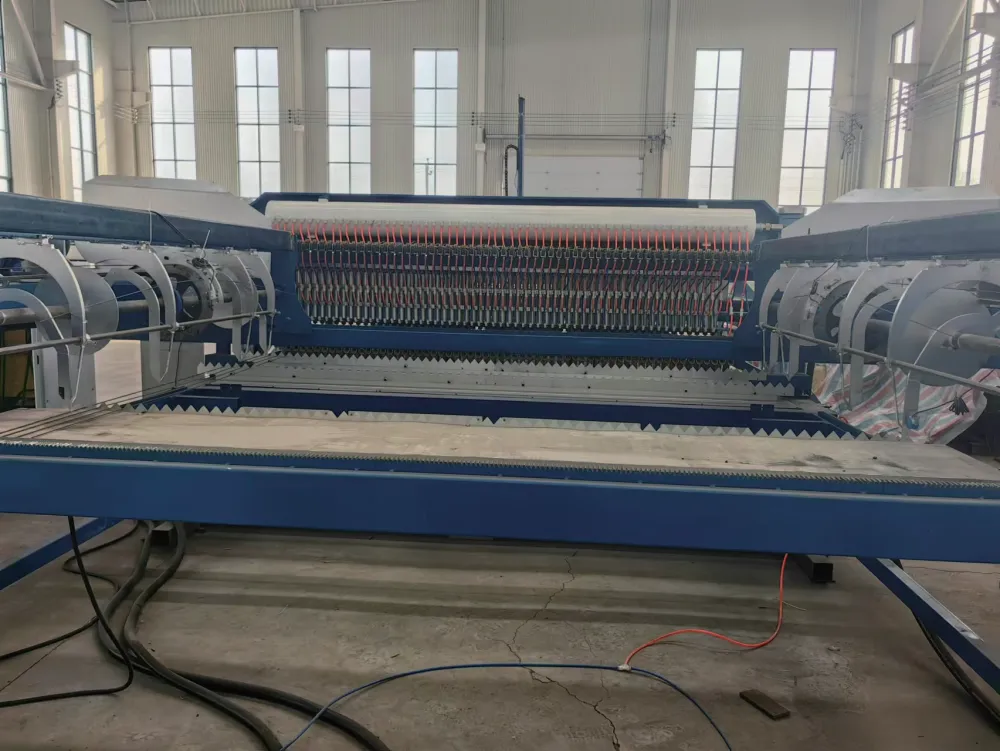
Construction-configuration welded wire mesh machines typically handle 4 to 12 mm wire, with the upper limit set by transformer capacity, electrode force, and frame rigidity. Slab and wall mesh from a welded wire mesh machine commonly uses 6 to 10 mm wire, while bridge decks and pile cages use 10 to 12 mm. A machine rated for 12 mm can weld lighter wire by reducing current and force, but a machine built for light fencing wire cannot weld construction rebar. Buyers should specify the heaviest wire they plan to run so the machine ships with matched transformer and electrode systems.
10.2 How much does a construction-grade welded wire mesh machine cost?
Construction-grade equipment sits at the top of the welded wire mesh machine price range. A heavy-duty welded wire mesh machine rated at 150 to 250 kVA with 2.4- to 3.0-meter welding width typically costs $120,000 to $300,000, compared with $30,000 to $150,000 for standard fencing and industrial machines. The premium reflects heavier transformers, stronger electrode arms, reinforced frames, and larger indexing systems. For fabricators entering construction mesh production, a used or mid-range machine handling 8 mm wire is a common starting point before upgrading to full rebar capacity.
10.3 Can one welded wire mesh machine produce both fencing mesh and construction mesh?
Yes, within limits. A welded wire mesh machine with a wide wire range — roughly 1.5 to 8.0 mm — can run fencing mesh on lighter settings and light construction mesh on heavier settings, provided the transformer and electrode force are sized for the heavier work. The practical constraint is duty cycle: continuous heavy-gauge welding generates more heat, so the machine must have adequate cooling. Machines that switch between light and heavy work typically run at reduced output on the heavy side, and fabricators usually dedicate separate machines once construction volume grows.
10.4 What maintenance does a construction welded wire mesh machine require?
Construction-grade machines demand the same core maintenance as other welded wire mesh machines — electrode dressing every 500 to 1,000 welds, transformer contact cleaning, and mechanism lubrication — plus additional attention to the heavier components. Electrode tips on a construction welded wire mesh machine wear faster in calendar time because weld currents are higher, so replacement intervals of 8,000 to 20,000 welds are typical. The indexing and feeding systems on heavy machines should be inspected weekly for play, since accumulated wear shows up as pitch drift on long panels. Hebei Jinlongyu Import And Export Trade Co., Ltd. supplies a maintenance schedule and spare parts list with each construction-configuration machine.
Recently Posted
-
Automation Trends in Wire Mesh Welding: From Manual Feeding to Fully Integrated Lines
September 4, 2026A few years ago, a mid-size mesh factory in Eastern Europe employed twelve operators across three shifts to run two manual-threadi Read More
 -
QC Inspection Checklist for Wire Mesh Welding Machines Before Shipment
September 4, 2026A while back, a buyer in Africa took delivery of a welded wire mesh machine and discovered on installation day that the transforme Read More
 -
Fully Automatic vs Semi-Automatic Welded Wire Mesh Machine: Output, Labor, and Cost Comparison
September 3, 2026Not long ago, a mesh producer in Southeast Asia doubled his factory floor but kept the same two semi-automatic welded wire mesh ma Read More
 -
What Is a Welded Wire Mesh Machine: Types and How It Works
September 2, 2026Some time ago, a construction materials distributor in the Middle East ordered 2,000 welded mesh panels from a supplier that had n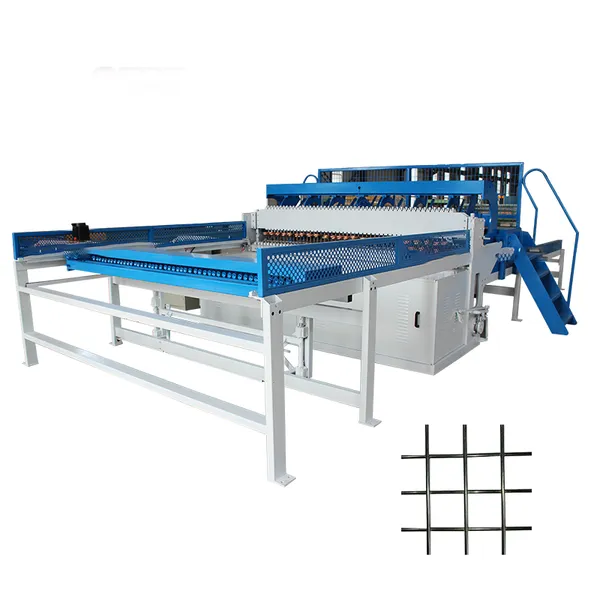 Read More

Contact Us
Recommended Products
-
 Welded Wire Panel Machine for Industrial Shelf and Partition ManufacturingNegotiableMOQ: 1 Set
 -
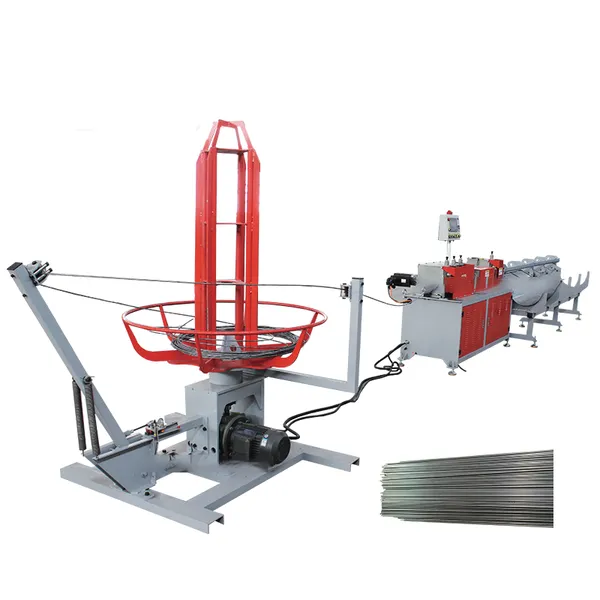
CNC Servo Straightening and Cutting Machine for Steel, Iron, and Stainless Steel WireNegotiableMOQ: 1 Set
-
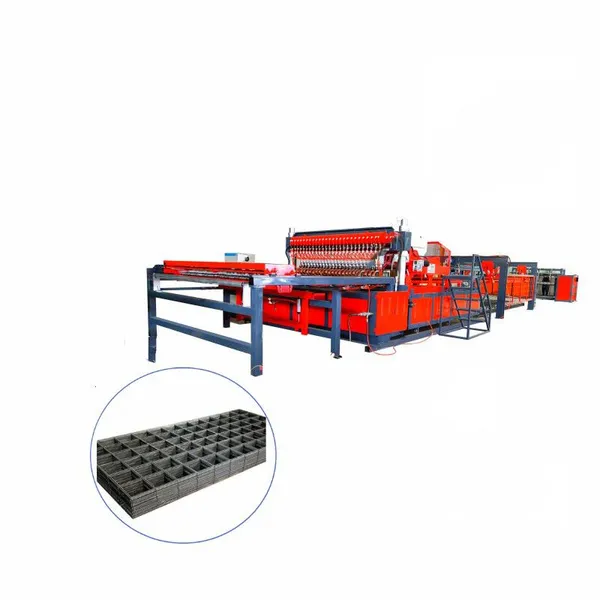
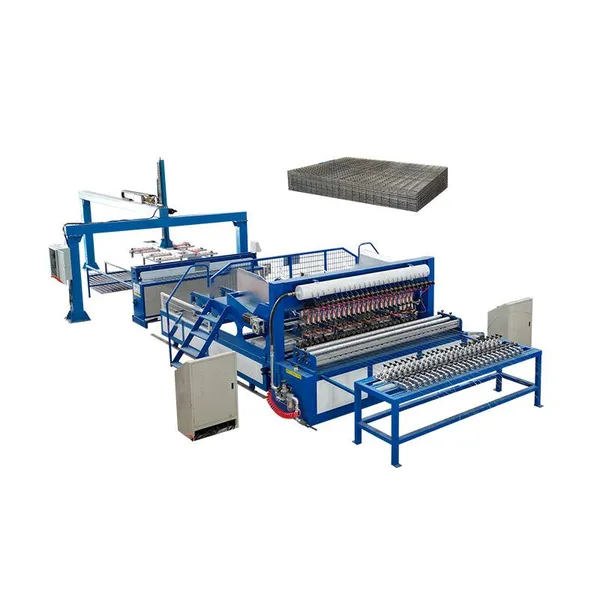
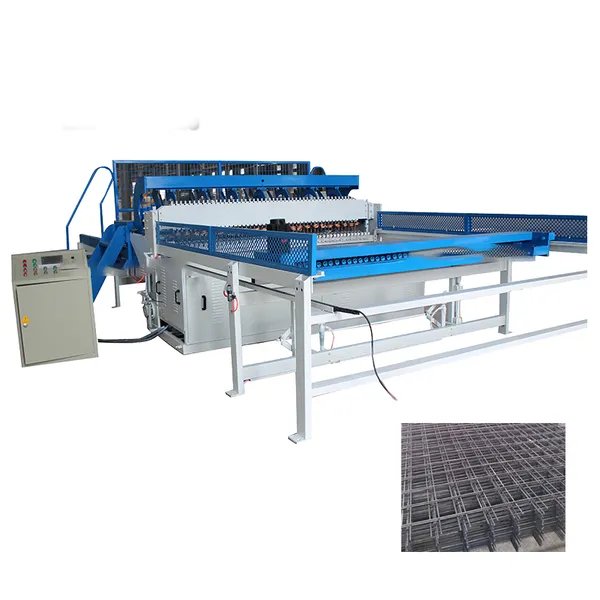
Professional Steel Panel Welded Wire Mesh Reinforcing Mesh Production LineNegotiableMOQ: 1 Set
-
Automatic Roll Welded Wire Mesh Welding Machine for Panel and Roll MeshNegotiableMOQ: 1 Set
-
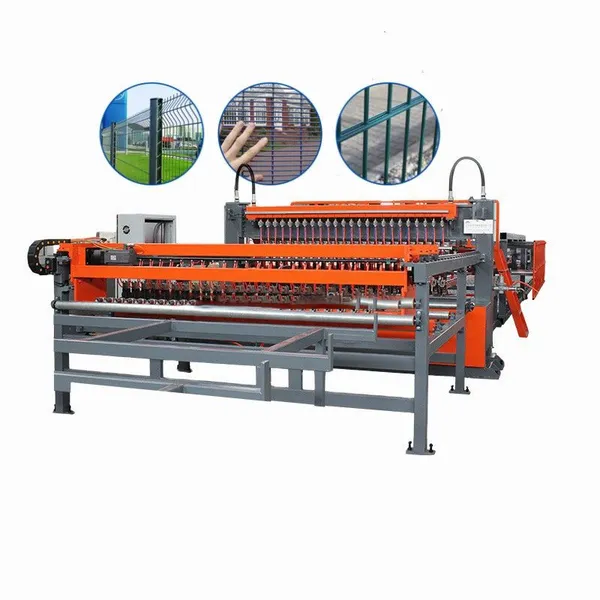
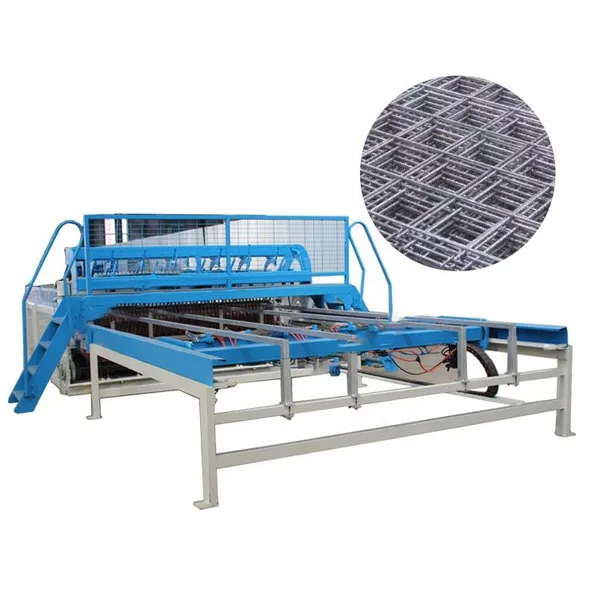
Stainless Steel Welded Wire Mesh Machine for Fencing ProductionNegotiableMOQ: 1 Set
-
Full Automatic PLC Control 5-12mm Wire Mesh Fence Welding EquipmentNegotiableMOQ: 1 Set
-
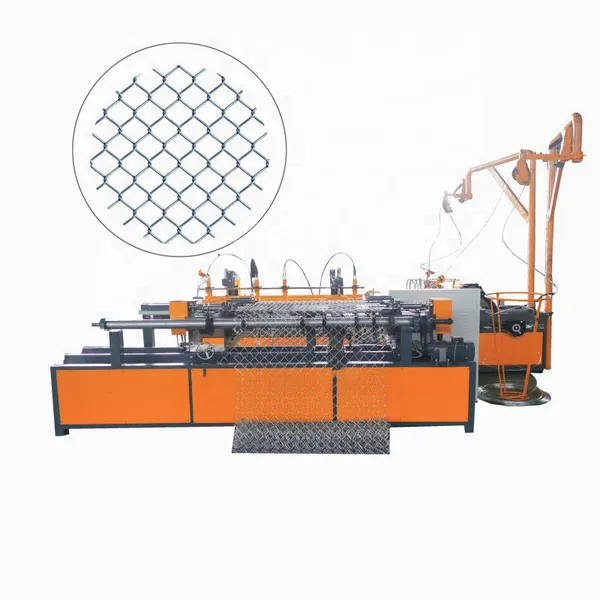
PLC Controlled Fully Automatic Chain Link Fence Machine for High-Speed ProductionNegotiableMOQ: 1 Set
-
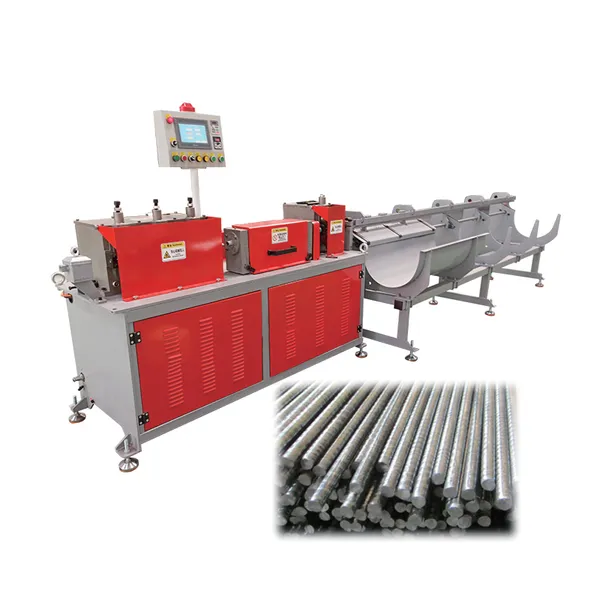
Automatic Mechanical Steel Wire Straightening and Cutting Machine for Industrial UseNegotiableMOQ: 1 Set
-
Factory Price Galvanized Steel Wire Mesh Welding Machine Automatic Welded Mesh MachineNegotiableMOQ: 1 Set
-
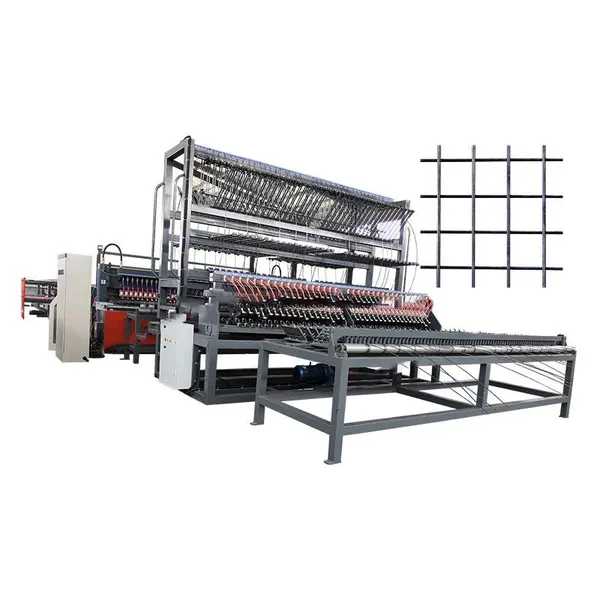
Razor Barbed Wire Making Machine/Razor Wire Fence for ProtectionNegotiableMOQ: 1 Set
-
Durable Industrial Welded Mesh Machine for Construction Fence ManufacturingNegotiableMOQ: 1 Set
-
Fence Welding Machine Bangladesh 4-Head Spot Welder 0.8-3mm Steel Wire 20KVANegotiableMOQ: 1 Unit
-
Reliable Bangladesh Fence Welding Machine Factory Direct Support Free Spare Parts KitNegotiableMOQ: 1 Unit
-
For Bangladesh Construction Site Fence Welding Machine Heavy Duty Steel Frame 12 Months WarrantyNegotiableMOQ: 1 Unit
-
Bangladesh Farm Fence Welding Machine Durable for Outdoor Perimeter Fencing 1 Year ServiceNegotiableMOQ: 1 Unit
-
Bangladesh Fence Panel Welder 2000x3000mm Capacity 30-50 Welds/Minute 380VNegotiableMOQ: 1 Unit
-
220V Semi-Auto Fence Welder for Bangladesh 2-6mm Wire Diameter PLC ControlNegotiableMOQ: 1 Unit
-
Bangladesh Fence Welding Machine 380V 3-Phase Automatic Wire Feeder 50-100 M/Min SpeedNegotiableMOQ: 1 Unit
-
Bangladesh Fence Mesh Welding Machine 1500mm Width Servo Motor Driven 60HzNegotiableMOQ: 1 Unit
-
Bangladesh Fence Welder With 2-Year Warranty On-Site Training Available 220V/380VNegotiableMOQ: 1 Unit

