

 Business License
Blog Categories

What Is a Welded Wire Mesh Machine: Types and How It Works
Some time ago, a construction materials distributor in the Middle East ordered 2,000 welded mesh panels from a supplier that had not tested its equipment under continuous production. Roughly 15% of the first container's panels showed cold welds — joints that held visually but fractured under a simple bend test. The distributor lost a warehouse flooring sub-contract worth approximately $120,000, and the replacement shipment took another six weeks. The root cause was straightforward: the welded wire mesh machine at the supplier's factory ran below rated current, and no one had checked weld strength before dispatch.
Failures of this kind are common enough that buyers of wire mesh should understand the equipment behind the product — the welded wire mesh machine. A welded wire mesh machine is the production backbone for welded wire mesh — the grid of intersecting wires fused at every junction that appears in concrete reinforcement, fencing, cages, shelves, and dozens of industrial products. Knowing what these machines are, how they work, and how the main types differ is the first step toward sourcing mesh that performs as specified.
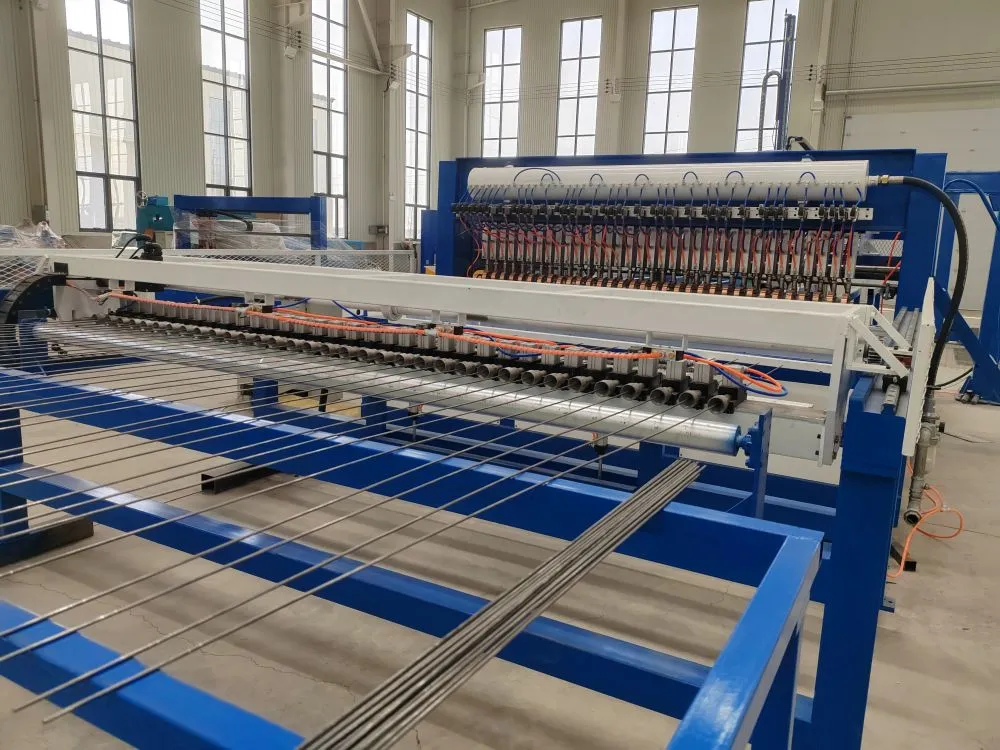
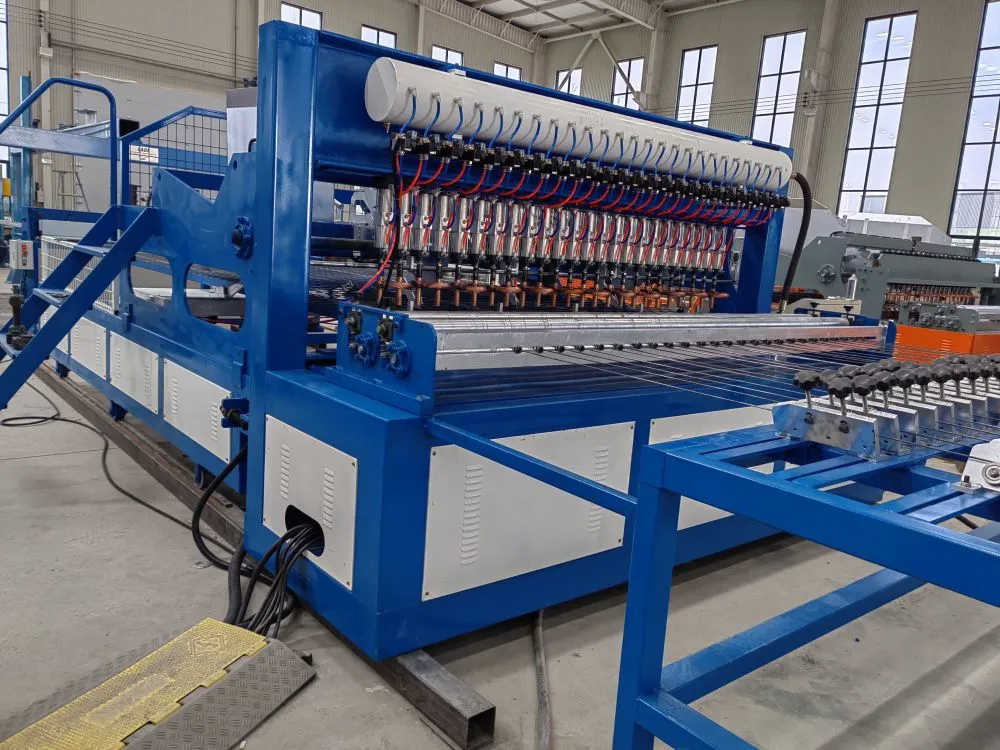
1. What Exactly Is a Welded Wire Mesh Machine
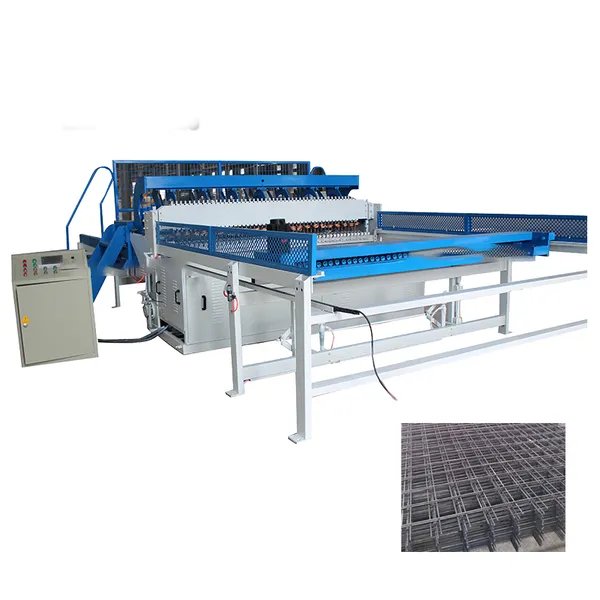
A welded wire mesh machine is automated resistance welding equipment that fuses intersecting longitudinal and transverse wires at every crossing point to form a continuous mesh panel or roll. Unlike woven mesh, where wires are mechanically interlocked, welded mesh relies on localized melting and pressure at each joint, producing a grid with high rigidity and uniform opening size.
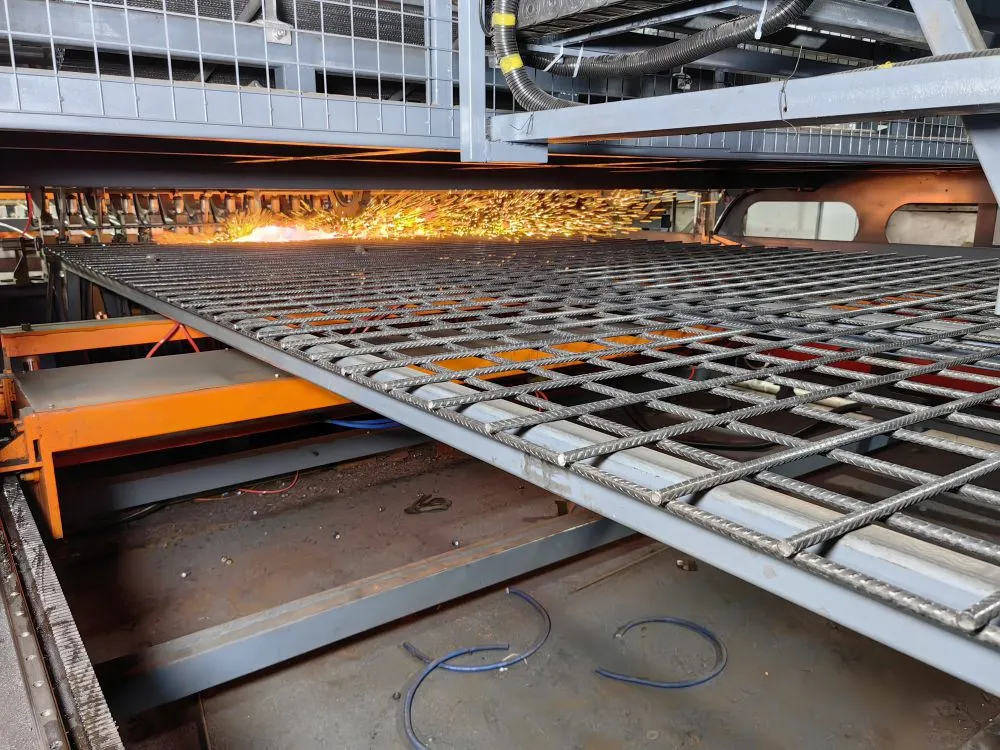
The machine feeds longitudinal wires through a guide system, positions transverse wires across them at a preset spacing, and brings a series of copper electrode pairs down onto each intersection. An electric current passes through the joint for a fraction of a second, heating the metal at the contact point until it fuses, then the electrodes lift and the panel indexes forward to the next row. This sequence repeats until the panel reaches its programmed length.
Welded wire mesh machines vary in size from compact units producing roughly 1.2-meter-wide rolls for fencing to industrial lines welding panels up to 3 meters wide for construction and infrastructure projects. Production capacity on a welded wire mesh machine ranges from roughly 150 panels per shift on a manual-threading unit to over 600 panels per shift on a fully automatic line.
2. Core Working Principle of a Welded Wire Mesh Machine: Resistance Welding Explained
The physics behind every welded wire mesh machine is resistance welding, the same principle used in spot welding. Two wires are pressed between copper electrodes while a high current — typically 10,000 to 40,000 amps at 5 to 20 volts — passes through the contact point. Electrical resistance at the junction generates heat, raising the metal to welding temperature in milliseconds.
Three parameters control weld quality on a welded wire mesh machine: current, squeeze force, and weld time. Current sets heat generation, squeeze force ensures intimate contact, and weld time controls how long heat is applied. A typical weld cycle on a mid-range machine runs 0.1 to 0.5 seconds per joint, with the panel indexing roughly 50 to 200 mm between welds.
The transformer is the heart of the electrical system on a welded wire mesh machine. A unit rated at 100 kVA can weld wires up to roughly 4 mm in diameter, while a 250 kVA welded wire mesh machine handles 10 to 12 mm reinforcing bars. Duty cycle — the percentage of time the transformer can operate at rated output — typically ranges from 30% to 60%, and it directly influences sustained production speed. Welded wire mesh machines with higher duty cycles maintain welding temperature across a full shift without overheating.
3. Main Types of Welded Wire Mesh Machines
Several distinct configurations of welded wire mesh machine dominate the market, and each fits a different production profile. Choosing between them depends on wire diameter range, panel size, output volume, and labor availability.
| Machine Type | Typical Wire Range | Best For | Output Reference |
|---|---|---|---|
| Manual threading welded wire mesh machine | 1.0 – 4.0 mm | Small batches, frequent mesh changes, low labor cost regions | 150 – 300 panels per shift |
| Semi-automatic welded wire mesh machine | 1.0 – 6.0 mm | Medium production with some automation of longitudinal feeding | 300 – 450 panels per shift |
| Fully automatic coil-fed welded wire mesh machine | 1.0 – 8.0 mm | High-volume, consistent mesh specifications | 450 – 600+ panels per shift |
| Rebar mesh welding machine | 4.0 – 12 mm | Construction reinforcing mesh, heavy gauge panels | 150 – 300 large panels per shift |
| Fence panel welding machine | 2.0 – 6.0 mm | Fencing panels with bent edges and frames | 300 – 500 panels per shift |
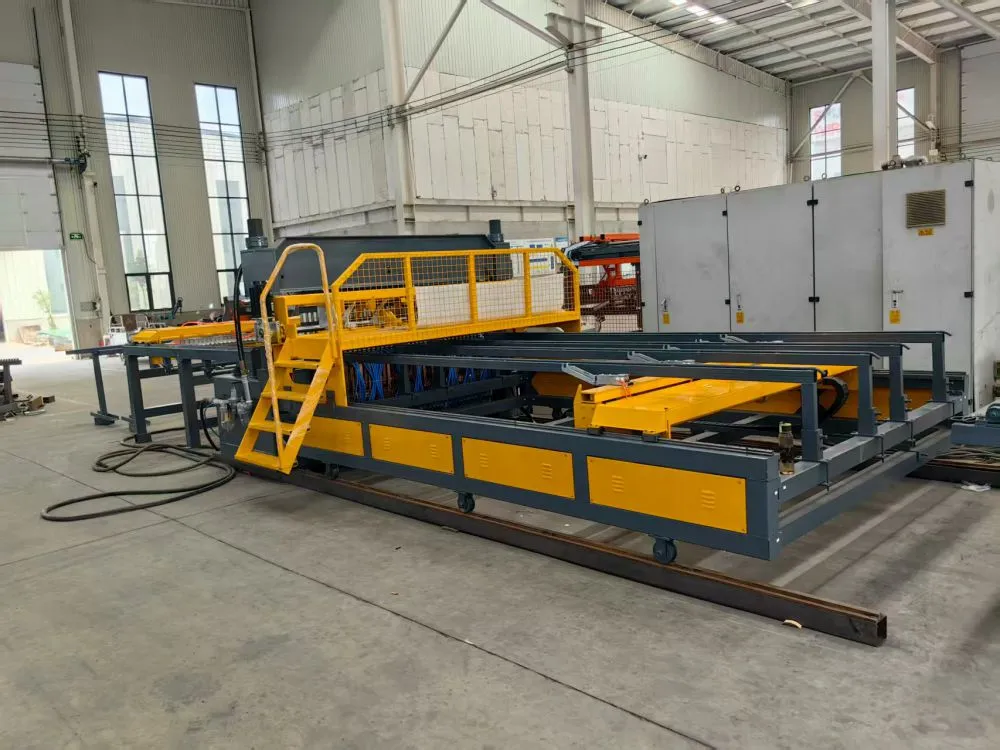
The distinction between manual threading and automatic feeding matters more than most buyers expect. On a manual-threading welded wire mesh machine, operators place each longitudinal wire into feed channels by hand before each run — labor-intensive, but flexible. On an automatic welded wire mesh machine, wires feed continuously from coils through straightening units, so changeover time between specifications drops dramatically.
Rebar mesh welding machines operate on a different scale. These welded wire mesh machine variants handle cold-drawn ribbed wire from 4 to 12 mm and are built with heavier transformers, stronger electrode arms, and reinforced frames to absorb the higher weld forces.
4. Key Components of a Welded Wire Mesh Machine
Every welded wire mesh machine shares a core set of components. Buyers who can inspect these parts — or ask the right questions — will separate a well-built welded wire mesh machine from a marginal one.
| Component | Function | What to Check |
|---|---|---|
| Decoilers and straightening units | Hold wire coils and remove curvature before welding | Straightness tolerance after straightening, usually within 2 mm per meter |
| Longitudinal wire feeding system | Positions parallel wires at preset spacing across the panel width | Spacing accuracy across the full width, ideally ±1 mm |
| Transverse wire feeder | Loads cross wires at programmed intervals | Consistent pitch over long runs without drift |
| Welding transformer | Supplies weld current at controlled voltage | kVA rating and duty cycle specification |
| Electrode heads with copper tips | Apply squeeze force and conduct current to each joint | Tip material (copper-chrome alloy preferred), cooling system |
| PLC control cabinet | Programs mesh pitch, weld sequence, and panel length | User interface language, memory slots for recipes |
| Panel shearing / cutting unit | Cuts finished mesh to length | Cut accuracy and burr condition |
Electrode quality is the single most important detail on a welded wire mesh machine. Copper tips carry the weld current and must dissipate heat between cycles; copper-chrome alloy tips typically last 10,000 to 30,000 welds before redressing, while lower-grade tips fail in a fraction of that time. Water cooling extends tip life and stabilizes weld quality during sustained production. Hebei Jinlongyu Import And Export Trade Co., Ltd. specifies copper-chrome electrodes as standard on its welded wire mesh machines, and recommends buyers confirm electrode material with any supplier before ordering.
5. Wire Diameter and Mesh Size Capability of a Welded Wire Mesh Machine
The operating envelope of a welded wire mesh machine is defined by two numbers: wire diameter range and mesh pitch range. Together they determine which products a machine can make, and therefore which markets it can serve.
Most standard welded wire mesh machines handle wire from 1.0 mm to 6.0 mm in diameter. Light-duty machines for poultry cages and shelving run 1.0 to 3.0 mm; general-purpose machines for fencing and industrial mesh run 1.5 to 5.0 mm; heavy machines for construction run 4.0 to 12 mm. Mesh pitch — the distance between adjacent wires — is adjustable on virtually every machine, typically from 25 mm up to 300 mm in both directions.
Material type also shapes the capability of a welded wire mesh machine. Mild steel wire is the default for most production. Galvanized wire requires roughly 10% to 15% more weld current because the zinc coating must be displaced before the steel-to-steel bond forms. Stainless steel welds with tighter squeeze-force control to avoid marking.
A versatile welded wire mesh machine should specify its current and force adjustment range so the operator can tune parameters across materials without modifying hardware.
6. Manual Threading vs Automatic Feeding on a Welded Wire Mesh Machine
The single biggest productivity variable on a welded wire mesh machine is how longitudinal wires enter the machine. This one decision shapes labor cost, changeover speed, and output consistency of a welded wire mesh machine.
On a manual-threading machine, operators lay each longitudinal wire into position by hand at the start of each run. For a 2.4-meter-wide panel with 50 mm pitch, that means placing roughly 48 wires — a task taking 15 to 30 minutes per setup. Manual threading suits producers who run many different mesh specifications in small quantities, because there is no coil inventory to manage and changeover is a matter of repositioning wires.
Automatic coil-fed systems change the economics of a welded wire mesh machine entirely. Longitudinal wires feed continuously from decoilers, so a single setup can run thousands of panels without interruption. Changeover between specs requires swapping coils and reprogramming pitch — typically 20 to 45 minutes. The trade-off is cost: a fully automatic welded wire mesh machine costs roughly 40% to 70% more than a manual-threading equivalent, and consumes floor space for decoiler stands.
7. Production Speed and Output Rates of a Welded Wire Mesh Machine
Output figures for a welded wire mesh machine are quoted in panels per shift, and the gap between machine types is significant. Understanding realistic output helps buyers size their investment correctly.
A manual-threading welded wire mesh machine producing standard fencing mesh at 1,000 to 2,000 welds per minute typically yields 150 to 300 panels per shift, with setup consuming 20% to 30% of the working day. A semi-automatic machine with powered longitudinal feeding reaches 300 to 450 panels per shift. A fully automatic coil-fed welded wire mesh machine sustains 450 to 600 panels per shift, running continuously with only scheduled stops.
Real-world output runs roughly 75% to 85% of rated capacity. A welded wire mesh machine rated at 500 panels per shift will typically deliver 380 to 425 in practice once material changes, electrode dressing, and minor adjustments are factored in. Jinlongyu Trading publishes realistic output figures based on sustained production trials rather than theoretical maximums, a practice buyers should look for when comparing quotes from welded wire mesh machine suppliers.
8. Common Applications of Welded Wire Mesh
Welded wire mesh produced on these machines reaches markets most buyers recognize immediately. The application mix determines which welded wire mesh machine configuration makes commercial sense.
Construction is the largest segment: welded mesh sheets reinforce concrete slabs, walls, foundations, and bridge decks, replacing hand-tied rebar in many applications. Fencing is the second major market — welded mesh panels and rolls for property boundaries, animal enclosures, and security perimeters. Agriculture consumes mesh for poultry cages, grain bins, and vineyard trellises. Industrial applications include storage shelving, machine guards, conveyor guards, and filter screens.
The same welded wire mesh machine can serve multiple segments if wire diameter range and panel width are chosen correctly. A machine welding 1.5 to 5.0 mm wire at 2.4-meter width covers fencing, shelving, and light construction; a heavy unit handling 6 to 12 mm covers construction mesh exclusively. Producers who plan to grow across segments typically buy the wider-range welded wire mesh machine even if its initial cost is higher.
9. How to Evaluate a Welded Wire Mesh Machine Before Buying
A practical inspection routine reveals more about a welded wire mesh machine than any brochure. Three checks are worth performing at the supplier's factory.
First, run a sample panel on the welded wire mesh machine using your specified wire grade and mesh pitch — not on the supplier's standard material — and test weld strength by bending individual joints 90 degrees back and forth. Quality welds survive five or more bends without fracture; cold welds break on the first or second cycle. Second, measure pitch consistency across the full width and length of a 2-meter sample: spacing should hold within roughly ±1 mm. Third, review the electrode maintenance records — a machine with a documented tip dressing schedule will produce far more consistent mesh than one without.
One recent example: a fencing producer in West Africa bought a manual-threading welded wire mesh machine without checking transformer duty cycle, then found the unit overheating after two hours of continuous running. After replacing the machine with a model with a 50% duty cycle transformer sourced through Hebei Jinlongyu Import & Export Trading, the operation ran full shifts and panel output rose roughly 40%. In a separate case, an agricultural supplier who ran a pre-shipment sample test on stainless wire reported zero mesh rejects across the first 200 panels delivered.
10. Frequently Asked Questions
10.1 What is the difference between welded wire mesh and woven wire mesh?
Welded wire mesh is produced on a welded wire mesh machine, which fuses intersecting wires at every junction using resistance welding. Woven wire mesh is made on looms that interlock wires mechanically without any fusion.
Welded mesh is stiffer, holds its opening size better under load, and is preferred for concrete reinforcement and rigid panels. Woven mesh flexes more, suits applications needing some give such as screening and sieving, and is generally lower in cost per square meter. The choice depends on whether rigidity or flexibility matters more for the end application.
10.2 How much does a welded wire mesh machine cost?
Pricing depends on configuration. A compact manual-threading welded wire mesh machine starts at roughly $15,000 to $25,000. A semi-automatic unit typically runs $30,000 to $60,000. Fully automatic coil-fed machines span $60,000 to $150,000 depending on width, transformer rating, and automation level.
Rebar mesh welding machines for heavy construction can exceed $200,000. Buyers should compare total cost of ownership — output per shift, labor requirements, and spare parts — rather than purchase price alone.
10.3 What wire diameters can a standard welded wire mesh machine handle?
A standard welded wire mesh machine handles wire from roughly 1.0 mm to 6.0 mm in diameter. Light-duty units are limited to 3.0 mm, while heavy construction machines handle up to 12 mm rebar. The limiting factors are transformer capacity, electrode force, and frame rigidity.
A machine rated for 6 mm wire can weld 1.5 mm wire by reducing current and force settings, but a machine designed for light wire cannot weld heavy rebar without mechanical and electrical upgrades. Specify your full wire diameter range at inquiry so the machine ships with matched components.
10.4 What maintenance does a welded wire mesh machine require?
Routine maintenance centers on the electrode tips and the electrical system. Copper electrode tips should be dressed every 500 to 1,000 welds and replaced after 10,000 to 30,000 welds depending on material and current level. Transformer contacts and busbars need periodic cleaning to prevent resistance buildup, which shows up as inconsistent weld quality.
Lubrication of the indexing and feeding mechanisms follows a daily and weekly schedule. Hebei Jinlongyu Import And Export Trade Co., Ltd. supplies a maintenance schedule with every welded wire mesh machine, covering daily, weekly, and monthly tasks, and stocks spare electrodes and contactors for fast delivery.
Recently Posted
-
Welded Wire Mesh Machines for Construction Rebar Cages: Applications in Building and Infrastructure
September 4, 2026A few years ago, a contractor on a highway overpass project in Southeast Asia discovered that hand-tied reinforcement cages were c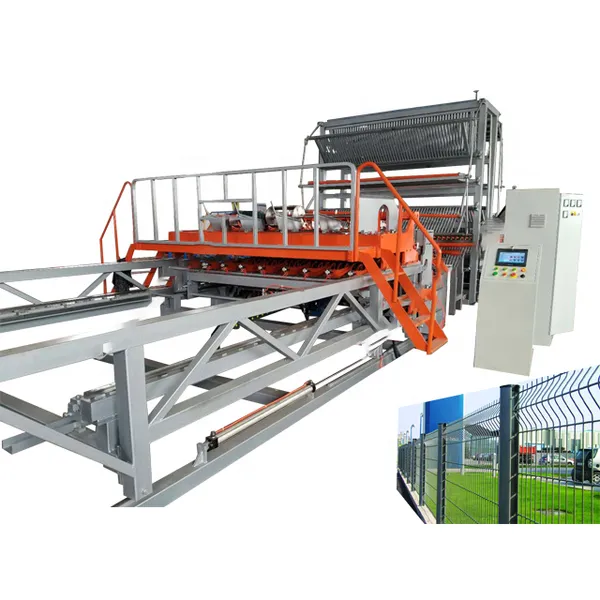 Read More
 -
Automation Trends in Wire Mesh Welding: From Manual Feeding to Fully Integrated Lines
September 4, 2026A few years ago, a mid-size mesh factory in Eastern Europe employed twelve operators across three shifts to run two manual-threadi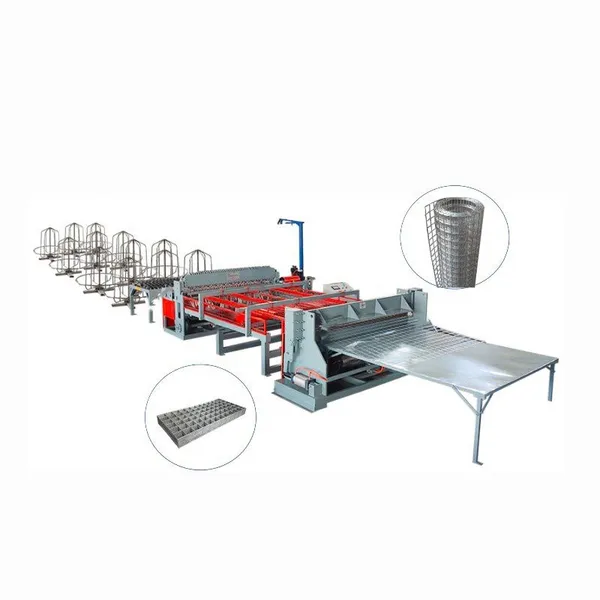 Read More
 -
QC Inspection Checklist for Wire Mesh Welding Machines Before Shipment
September 4, 2026A while back, a buyer in Africa took delivery of a welded wire mesh machine and discovered on installation day that the transforme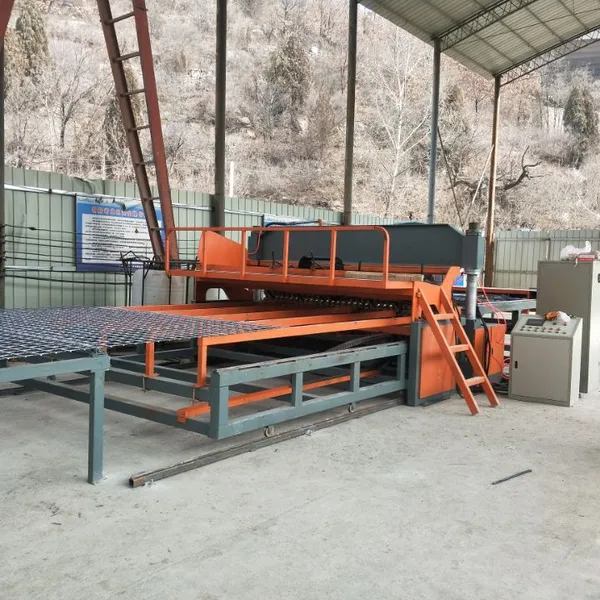 Read More
 -
Fully Automatic vs Semi-Automatic Welded Wire Mesh Machine: Output, Labor, and Cost Comparison
September 3, 2026Not long ago, a mesh producer in Southeast Asia doubled his factory floor but kept the same two semi-automatic welded wire mesh ma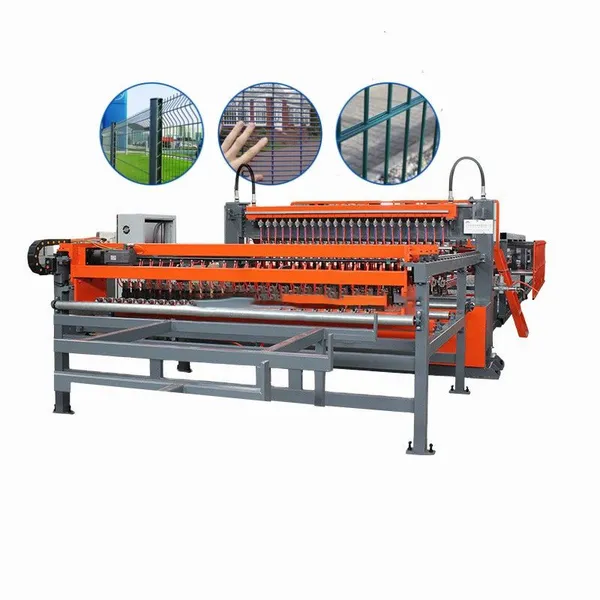 Read More

Contact Us
Recommended Products
-
 Welded Wire Panel Machine for Industrial Shelf and Partition ManufacturingNegotiableMOQ: 1 Set
 -
CNC Servo Straightening and Cutting Machine for Steel, Iron, and Stainless Steel WireNegotiableMOQ: 1 Set
-
Professional Steel Panel Welded Wire Mesh Reinforcing Mesh Production LineNegotiableMOQ: 1 Set
-
Automatic Roll Welded Wire Mesh Welding Machine for Panel and Roll MeshNegotiableMOQ: 1 Set
-
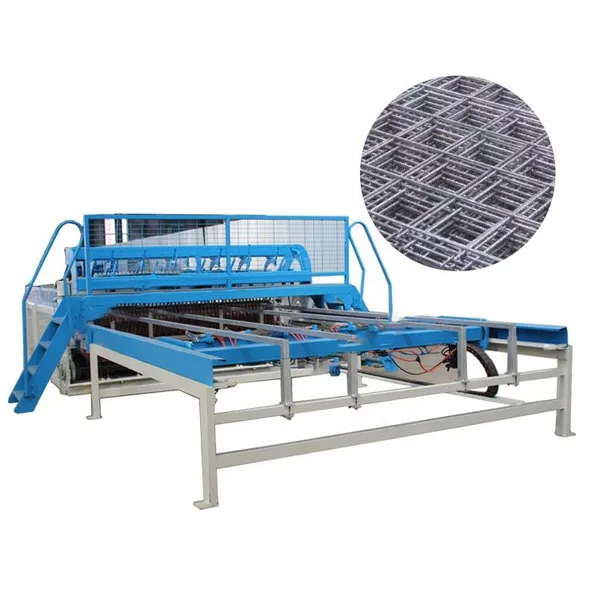
Stainless Steel Welded Wire Mesh Machine for Fencing ProductionNegotiableMOQ: 1 Set
-
Full Automatic PLC Control 5-12mm Wire Mesh Fence Welding EquipmentNegotiableMOQ: 1 Set
-
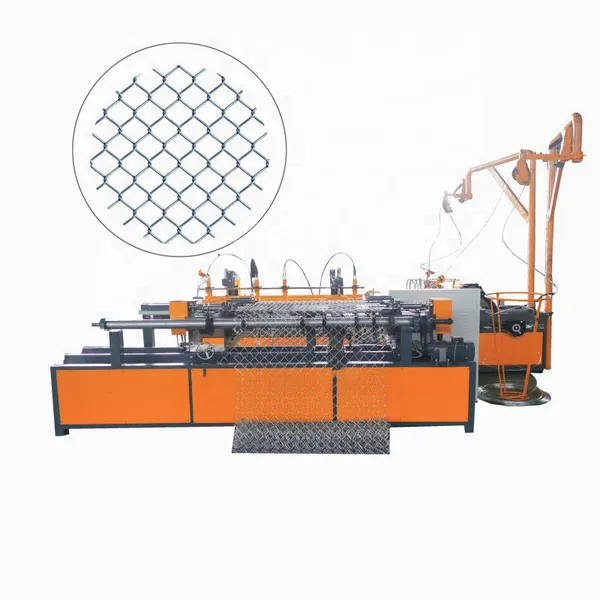
PLC Controlled Fully Automatic Chain Link Fence Machine for High-Speed ProductionNegotiableMOQ: 1 Set
-
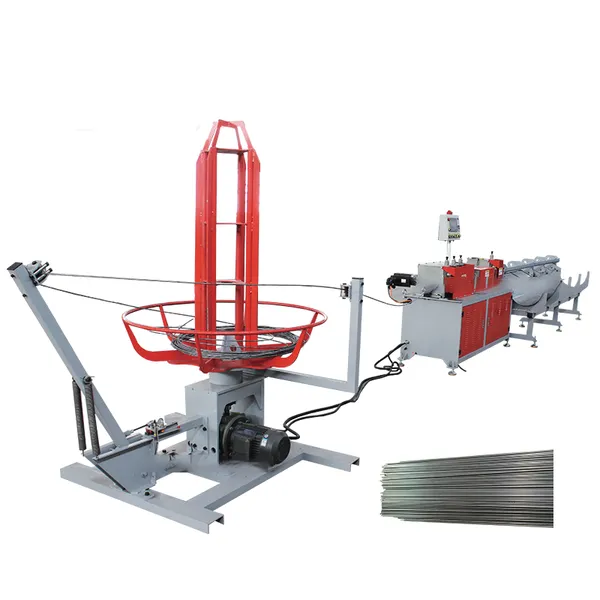
Automatic Mechanical Steel Wire Straightening and Cutting Machine for Industrial UseNegotiableMOQ: 1 Set
-
Factory Price Galvanized Steel Wire Mesh Welding Machine Automatic Welded Mesh MachineNegotiableMOQ: 1 Set
-
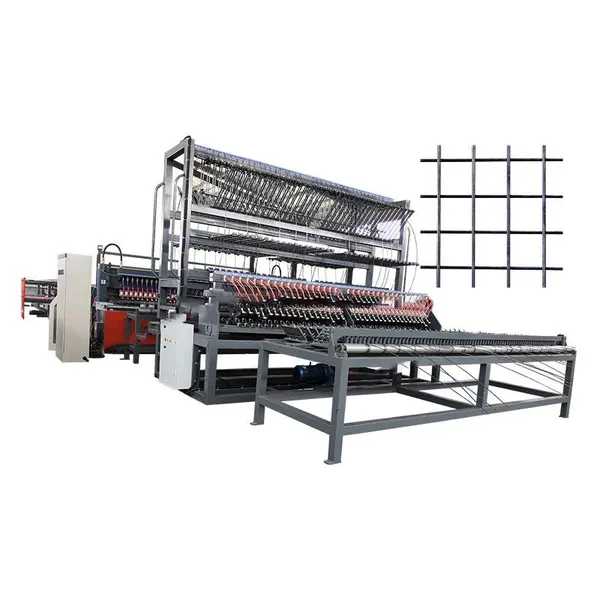
Razor Barbed Wire Making Machine/Razor Wire Fence for ProtectionNegotiableMOQ: 1 Set
-
Durable Industrial Welded Mesh Machine for Construction Fence ManufacturingNegotiableMOQ: 1 Set
-
Fence Welding Machine Bangladesh 4-Head Spot Welder 0.8-3mm Steel Wire 20KVANegotiableMOQ: 1 Unit
-
Reliable Bangladesh Fence Welding Machine Factory Direct Support Free Spare Parts KitNegotiableMOQ: 1 Unit
-
For Bangladesh Construction Site Fence Welding Machine Heavy Duty Steel Frame 12 Months WarrantyNegotiableMOQ: 1 Unit
-
Bangladesh Farm Fence Welding Machine Durable for Outdoor Perimeter Fencing 1 Year ServiceNegotiableMOQ: 1 Unit
-
Bangladesh Fence Panel Welder 2000x3000mm Capacity 30-50 Welds/Minute 380VNegotiableMOQ: 1 Unit
-
220V Semi-Auto Fence Welder for Bangladesh 2-6mm Wire Diameter PLC ControlNegotiableMOQ: 1 Unit
-
Bangladesh Fence Welding Machine 380V 3-Phase Automatic Wire Feeder 50-100 M/Min SpeedNegotiableMOQ: 1 Unit
-
Bangladesh Fence Mesh Welding Machine 1500mm Width Servo Motor Driven 60HzNegotiableMOQ: 1 Unit
-
Bangladesh Fence Welder With 2-Year Warranty On-Site Training Available 220V/380VNegotiableMOQ: 1 Unit

