

 Business License
Blog Categories

Fully Automatic vs Semi-Automatic Welded Wire Mesh Machine: Output, Labor, and Cost Comparison
Not long ago, a mesh producer in Southeast Asia doubled his factory floor but kept the same two semi-automatic welded wire mesh machines. Output barely moved — each unit still needed three operators, and wire threading consumed the first hour of every shift. After nine months he replaced one machine with a fully automatic welded wire mesh machine running on coil-fed wire, and that single unit produced more panels per week than the two semi-automatic machines combined, with one operator monitoring two stations. The lesson was not that automation is always better, but that the comparison depends on volume, labor cost, and product mix.
Every fabricator considering a new line faces the same fork: a fully automatic or a semi-automatic welded wire mesh machine. The decision drives not only the purchase price but staffing levels, changeover speed, output consistency, and the range of products the line can run profitably. This article compares the two configurations across output, labor, cost, flexibility, and reliability — with figures that help buyers project their own payback.
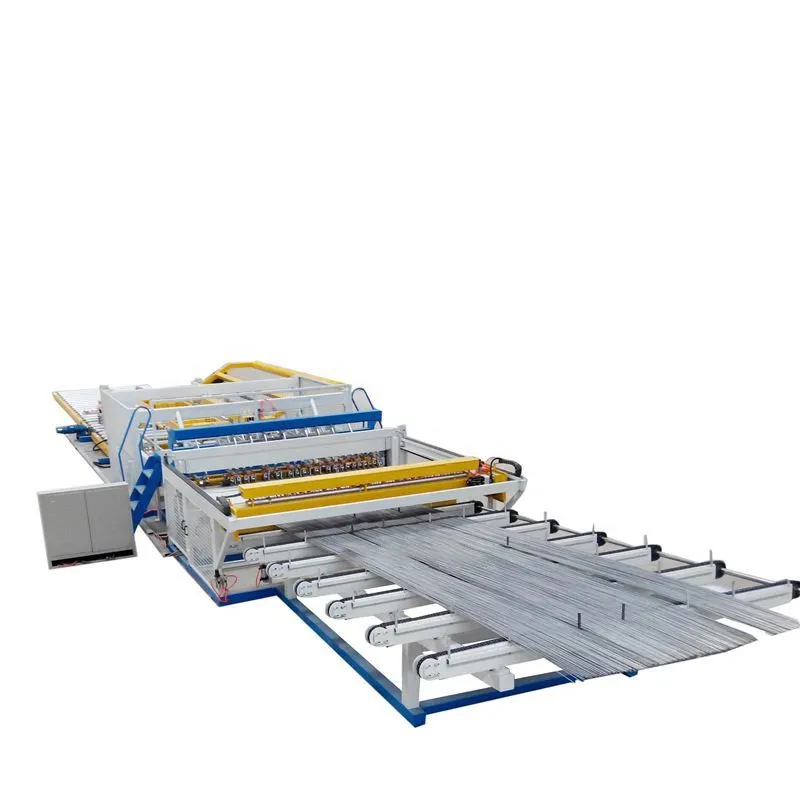
1. What Separates a Fully Automatic Welded Wire Mesh Machine from a Semi-Automatic Unit
The boundary between the two configurations comes down to how longitudinal wires enter the machine. On a semi-automatic welded wire mesh machine, operators thread each longitudinal wire through the guide channels by hand at the start of every run. The welding sequence itself is automated, but wire loading is manual labor. On a fully automatic welded wire mesh machine, longitudinal wires feed continuously from decoilers through straightening and tensioning units, so no operator touches the wire between setups.
Everything downstream of the feeding system — transverse wire loading, welding sequence, panel indexing, and cutting — is automated on both types. The differences in output, labor, and cost all trace back to that single design decision about longitudinal feeding. In practice, the price gap between the two welded wire mesh machine configurations ranges from roughly 40% to 70%, which is why the choice deserves a structured comparison rather than a default preference for more automation.
2. Output Comparison: Panels per Shift on Each Welded Wire Mesh Machine
Output is where the two configurations diverge most sharply. A semi-automatic welded wire mesh machine typically produces 300 to 450 standard fencing panels per shift, with 20% to 30% of working time consumed by manual threading and adjustments between runs. A fully automatic coil-fed welded wire mesh machine sustains 450 to 600 panels per shift in continuous operation, stopping only for scheduled maintenance and electrode dressing.
The difference compounds over longer runs. Because a fully automatic welded wire mesh machine does not stop for re-threading, a run of 5,000 identical panels completes roughly 35% to 45% faster than on a semi-automatic unit, even before considering that the automatic machine runs unattended through breaks and shift changes. The practical output ratio that most producers report is roughly 1.4 to 1.6 panels for every panel a semi-automatic line produces in the same shift.
Output per operator favors the automatic line even more. A semi-automatic welded wire mesh machine needs two to three people during threading and one to two during welding. A fully automatic welded wire mesh machine runs with one operator supervising feeding, weld quality, and panel stacking across one or two machines. In high-wage markets this labor multiplier often decides the purchase alone.
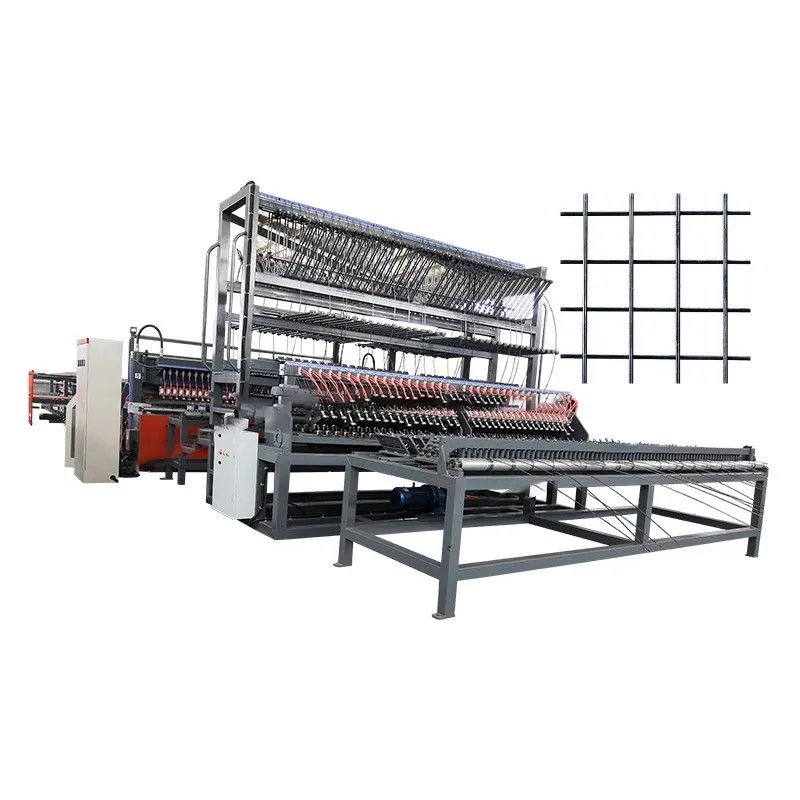
3. Labor Requirements: Staffing a Welded Wire Mesh Machine
Labor is the second axis of comparison, and its weight in the welded wire mesh machine decision depends entirely on local wage levels. In regions where skilled labor costs $8 to $15 per hour, the labor saving from automation can justify the higher capital cost within 18 to 30 months. In low-wage regions, manual threading on a semi-automatic welded wire mesh machine may remain the more profitable choice.
A semi-automatic welded wire mesh machine requires a crew of roughly three to four for a full shift: two operators for threading and stacking, one for welding control, and one for material handling. A fully automatic line needs one to two people per machine — one operator and one material handler — and that crew can supervise two machines when the layout puts decoilers and stacking stations in easy reach. Annual labor cost for a single-shift line typically differs by roughly $25,000 to $60,000 per year between the two configurations, depending on market.
Skill level matters as well. Manual threading is repetitive work with high turnover, so a semi-automatic welded wire mesh machine carries a hidden training cost as crews change. Automatic lines shift the operator's role from manual labor to quality monitoring, which reduces turnover and the defect rate that new operators introduce.
4. Cost Comparison: Purchase Price and Total Cost of Ownership
Purchase price is the most visible difference, but total cost of ownership over five to seven years is the number that should drive the decision. The figures below reflect typical ranges for a mid-size welded wire mesh machine with 8 to 12 electrode groups and 2.4-meter panel width.
| Cost Item | Semi-Automatic Welded Wire Mesh Machine | Fully Automatic Welded Wire Mesh Machine |
|---|---|---|
| Purchase price | $30,000 – $60,000 | $60,000 – $150,000 |
| Ancillary equipment (decoilers, straighteners) | Often not required | $5,000 – $15,000 |
| Annual labor (single shift) | $40,000 – $90,000 | $15,000 – $35,000 |
| Maintenance and consumables per year | $4,000 – $8,000 | $6,000 – $12,000 |
| Scrap rate on standard runs | 1.5% – 3% | 0.5% – 1.5% |
| Five-year total cost of ownership | Roughly $280,000 – $520,000 | Roughly $250,000 – $520,000 |
The table shows why the automatic option frequently wins on total cost despite the higher purchase price: the labor saving accumulates every year, and the lower scrap rate reduces material loss on continuous runs. The crossover point is typically 2,000 to 3,000 panels per week. Below that volume, a semi-automatic welded wire mesh machine usually offers the lower total cost; above it, the fully automatic line pays back the price premium within two to three years.
5. Changeover and Flexibility on a Welded Wire Mesh Machine
Flexibility is the area where the semi-automatic welded wire mesh machine holds a genuine advantage. Changing mesh pitch, wire diameter, or panel length on a semi-automatic unit means repositioning the threaded wires and reprogramming the PLC — a changeover taking roughly 30 to 60 minutes for an experienced crew, with no coil inventory to manage.
On a fully automatic welded wire mesh machine, changeover requires swapping the wire coils on the decoilers, threading new wire through the straightening units, and adjusting pitch in the control system. Total changeover time is typically 45 to 90 minutes, and the machine ties up more capital equipment while idle during the switch. Producers who run more than three different mesh specifications per day may lose more time to changeovers on an automatic line than they gain in running speed.
Jinlongyu Trading recommends a simple rule: if more than roughly 40% of your production is short runs under 500 panels, the flexibility of a semi-automatic welded wire mesh machine usually serves the business better. If production is dominated by long runs of standard specifications, the automatic configuration wins on cost per panel.
6. Wire Diameter and Specification Range of a Welded Wire Mesh Machine
Both configurations cover similar wire diameter ranges, so the choice does not usually limit product capability. A standard semi-automatic welded wire mesh machine handles 1.0 to 6.0 mm wire; a fully automatic unit with heavier transformers extends the range to 8.0 mm or beyond for construction mesh. The heavier wire diameters demand more weld current and stronger electrode force, which is a transformer specification question, not an automation question.
One practical difference: on a semi-automatic welded wire mesh machine, changing wire diameter requires re-threading all longitudinal wires by hand, which for a 2.4-meter-wide panel means handling roughly 24 to 48 wires depending on pitch. On a fully automatic unit, diameter changes are handled at the decoilers and straighteners. For producers running multiple diameters in the same week, the automatic line reduces setup labor noticeably, but the semi-automatic unit remains adequate when diameter changes are infrequent.
7. Reliability and Maintenance: What Each Welded Wire Mesh Machine Demands
Reliability differences between a fully automatic and a semi-automatic welded wire mesh machine are smaller than many buyers assume, because the welding core — transformer, electrodes, indexing mechanism — is shared. The additional components on a fully automatic welded wire mesh machine are the decoilers, straightening units, and servo-driven feeding system, and these add roughly 10% to 20% to the maintenance workload.
Electrode care dominates maintenance on both types. Copper tips need dressing every 500 to 1,000 welds and replacement after 10,000 to 30,000 welds. A fully automatic welded wire mesh machine runs through tips faster in calendar time because it welds more panels per shift, so consumable spending per year runs roughly 50% higher — but the cost per panel is lower because output rises proportionally.
Downtime risk also differs. On a semi-automatic welded wire mesh machine, a feeding fault stops one machine and the crew can often clear it within minutes. On a fully automatic line, a decoiler jam can idle two machines if one operator supervises both, so spare straightening rollers and a documented fault-response routine matter more. Hebei Jinlongyu Import And Export Trade Co., Ltd. includes a spare parts list and fault-response guide with every fully automatic welded wire mesh machine it ships, covering the most common feeding and control faults.
8. Decision Framework: Which Welded Wire Mesh Machine Fits Your Operation
Choosing between the two configurations is a calculation, not a preference. A structured framework produces a defensible answer in most cases. The company uses a five-factor scoring approach that buyers can replicate.
Score each factor on a 1-to-5 scale, where 5 favors the fully automatic welded wire mesh machine: weekly volume (more than 3,000 panels favors automatic), specification stability (fewer than three changes per week favors automatic), labor cost (above $8 per hour favors automatic), available capital (favor automatic only if the price premium is affordable), and skill availability (scarcity of reliable operators favors automatic). A total above 20 points points strongly toward the automatic configuration; below 15, the semi-automatic welded wire mesh machine usually delivers better economics. Jinlongyu Trading uses this five-factor scoring approach in its own equipment planning.
One recent example: a fencing contractor in Latin America scored 23 points — high volume, stable specifications, and labor costs around $10 per hour — and replaced two semi-automatic lines with one fully automatic welded wire mesh machine. Panel output stayed flat while the workforce dropped from eight to three, and the machine paid back its premium in roughly 26 months. In a contrasting case, a producer of custom-size mesh panels scored 12 points and kept a semi-automatic welded wire mesh machine, reporting that changeover flexibility generated more revenue than higher running speed would have.
9. Frequently Asked Questions
9.1 How much more does a fully automatic welded wire mesh machine cost?
A fully automatic welded wire mesh machine typically costs roughly 40% to 70% more than a comparable semi-automatic unit. For mid-size equipment with 2.4-meter panel width, semi-automatic machines run $30,000 to $60,000 while fully automatic coil-fed machines span $60,000 to $150,000, plus $5,000 to $15,000 for decoilers and straightening equipment. The price premium is recovered through labor savings and higher output when weekly volume exceeds roughly 2,000 to 3,000 panels; below that volume the semi-automatic configuration usually offers lower total cost of ownership.
9.2 Can a semi-automatic welded wire mesh machine be upgraded to fully automatic later?
In most cases, no. The automatic configuration requires structural differences — decoiler stands, straightening units, servo-driven feeding, and a control system with recipe memory — that are difficult to retrofit onto a machine designed for manual threading. Some suppliers offer a partial upgrade path by adding powered feeding, but the cost of retrofitting usually approaches 60% to 80% of buying a new fully automatic welded wire mesh machine. Buyers expecting volume growth are better served by purchasing the automatic configuration at the outset.
9.3 Which type is better for producing many different mesh specifications?
For frequent specification changes, the semi-automatic welded wire mesh machine is generally the better choice. Changeover on a semi-automatic unit takes roughly 30 to 60 minutes because operators simply reposition the threaded wires and adjust pitch settings. A fully automatic line requires swapping coils, re-threading through straighteners, and reprogramming — typically 45 to 90 minutes — while tying up more capital equipment during the switch. Producers running more than three different specifications per day, or many short runs under 500 panels, usually find the semi-automatic configuration more flexible and profitable.
9.4 What is the payback period for a fully automatic welded wire mesh machine?
Payback depends on volume and labor cost. In high-wage markets where operators cost more than $8 per hour and production exceeds 3,000 panels per week, the labor saving alone typically recovers the price premium in 18 to 30 months. In low-wage regions with moderate volume, payback stretches to four to five years, which may make the semi-automatic welded wire mesh machine the better investment. Hebei Jinlongyu Import & Export Trading provides a projected payback worksheet with quotations, based on the buyer's stated volume, panel mix, and local labor rates.
Recently Posted
-
Welded Wire Mesh Machines for Construction Rebar Cages: Applications in Building and Infrastructure
September 4, 2026A few years ago, a contractor on a highway overpass project in Southeast Asia discovered that hand-tied reinforcement cages were c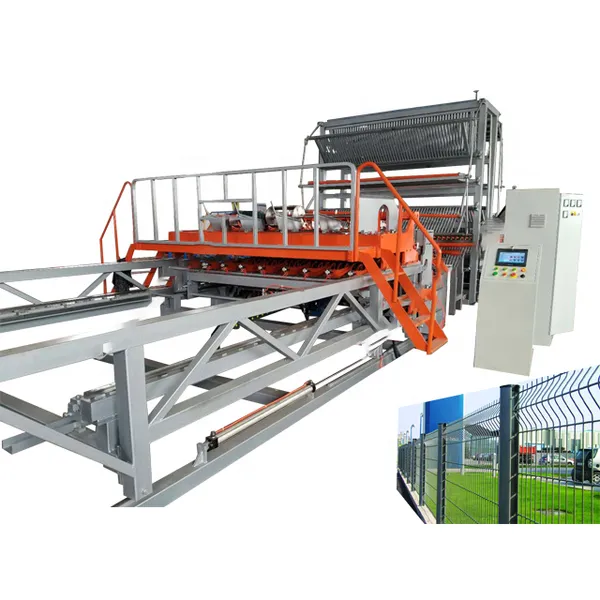 Read More
 -
Automation Trends in Wire Mesh Welding: From Manual Feeding to Fully Integrated Lines
September 4, 2026A few years ago, a mid-size mesh factory in Eastern Europe employed twelve operators across three shifts to run two manual-threadi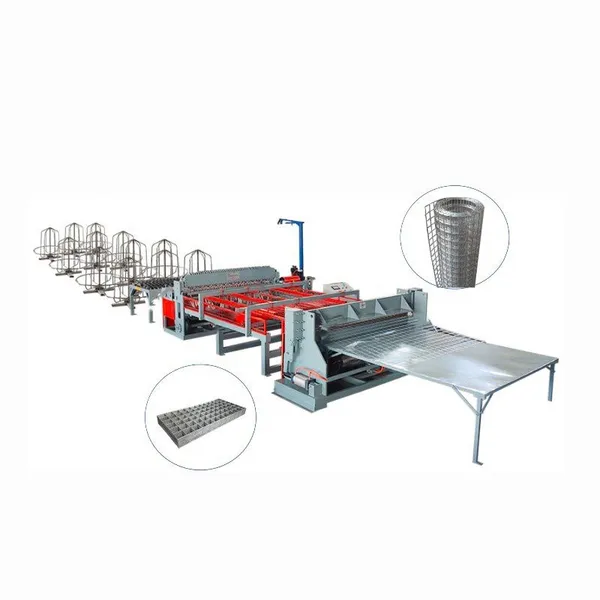 Read More
 -
QC Inspection Checklist for Wire Mesh Welding Machines Before Shipment
September 4, 2026A while back, a buyer in Africa took delivery of a welded wire mesh machine and discovered on installation day that the transforme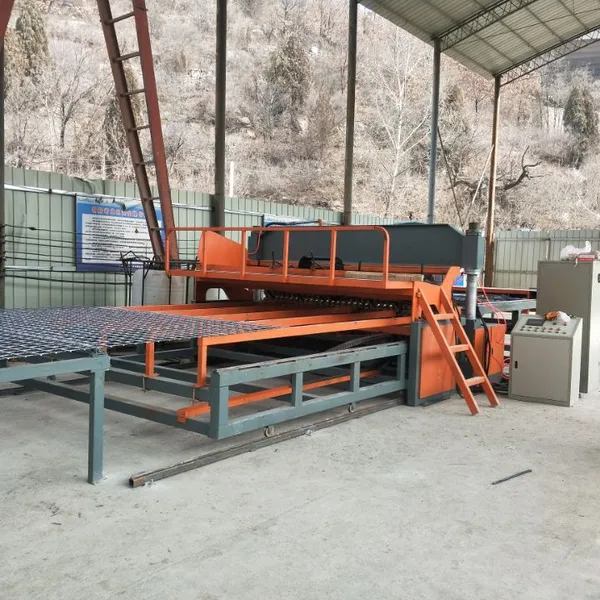 Read More
 -
What Is a Welded Wire Mesh Machine: Types and How It Works
September 2, 2026Some time ago, a construction materials distributor in the Middle East ordered 2,000 welded mesh panels from a supplier that had n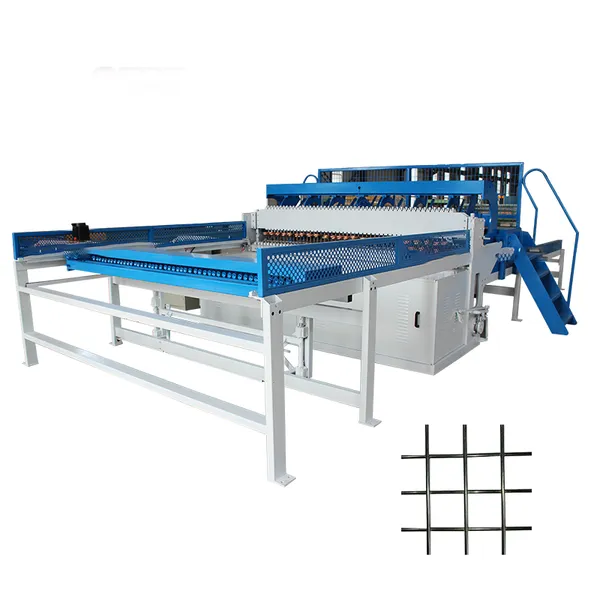 Read More

Contact Us
Recommended Products
-
 Welded Wire Panel Machine for Industrial Shelf and Partition ManufacturingNegotiableMOQ: 1 Set
 -
CNC Servo Straightening and Cutting Machine for Steel, Iron, and Stainless Steel WireNegotiableMOQ: 1 Set
-
Professional Steel Panel Welded Wire Mesh Reinforcing Mesh Production LineNegotiableMOQ: 1 Set
-
Automatic Roll Welded Wire Mesh Welding Machine for Panel and Roll MeshNegotiableMOQ: 1 Set
-
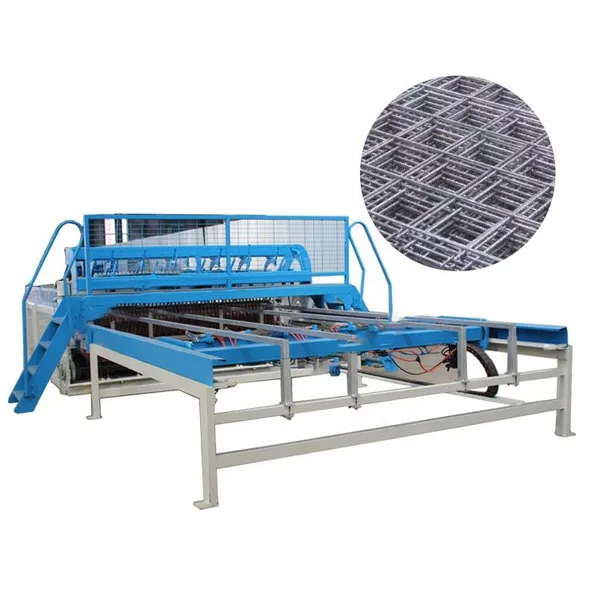
Stainless Steel Welded Wire Mesh Machine for Fencing ProductionNegotiableMOQ: 1 Set
-
Full Automatic PLC Control 5-12mm Wire Mesh Fence Welding EquipmentNegotiableMOQ: 1 Set
-
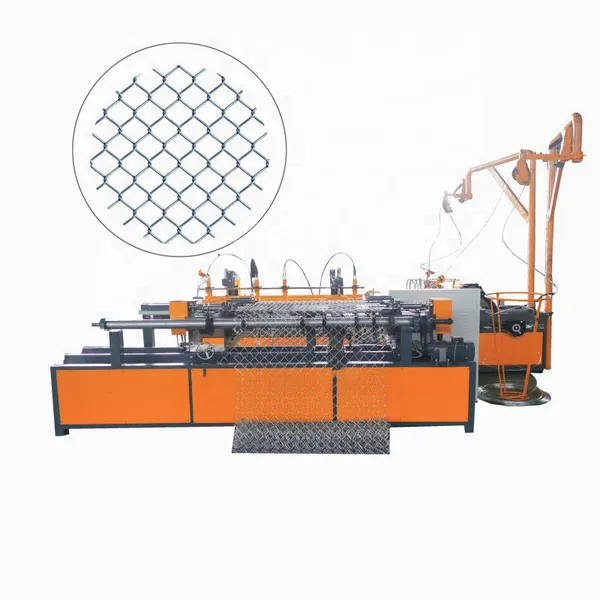
PLC Controlled Fully Automatic Chain Link Fence Machine for High-Speed ProductionNegotiableMOQ: 1 Set
-
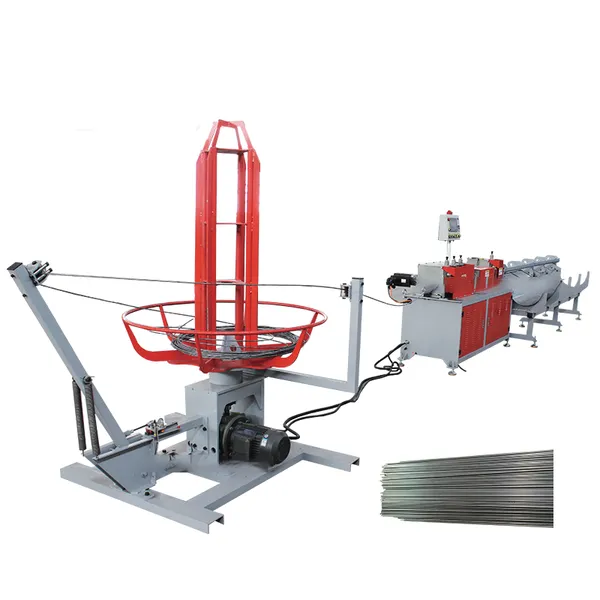
Automatic Mechanical Steel Wire Straightening and Cutting Machine for Industrial UseNegotiableMOQ: 1 Set
-
Factory Price Galvanized Steel Wire Mesh Welding Machine Automatic Welded Mesh MachineNegotiableMOQ: 1 Set
-
Razor Barbed Wire Making Machine/Razor Wire Fence for ProtectionNegotiableMOQ: 1 Set
-
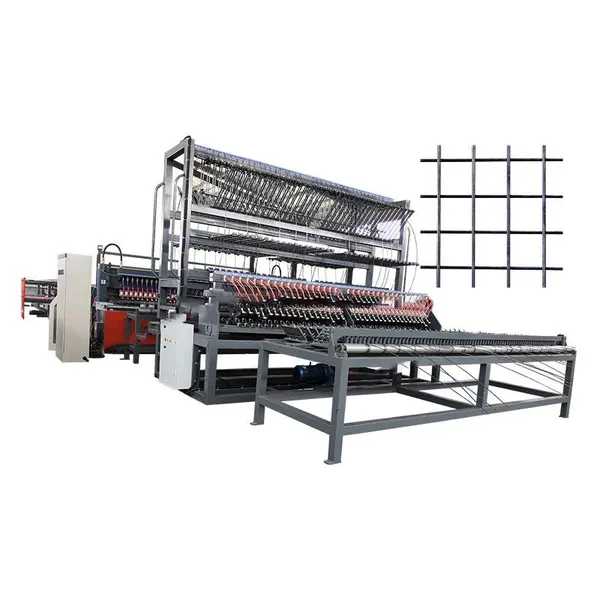
Durable Industrial Welded Mesh Machine for Construction Fence ManufacturingNegotiableMOQ: 1 Set
-
Fence Welding Machine Bangladesh 4-Head Spot Welder 0.8-3mm Steel Wire 20KVANegotiableMOQ: 1 Unit
-
Reliable Bangladesh Fence Welding Machine Factory Direct Support Free Spare Parts KitNegotiableMOQ: 1 Unit
-
For Bangladesh Construction Site Fence Welding Machine Heavy Duty Steel Frame 12 Months WarrantyNegotiableMOQ: 1 Unit
-
Bangladesh Farm Fence Welding Machine Durable for Outdoor Perimeter Fencing 1 Year ServiceNegotiableMOQ: 1 Unit
-
Bangladesh Fence Panel Welder 2000x3000mm Capacity 30-50 Welds/Minute 380VNegotiableMOQ: 1 Unit
-
220V Semi-Auto Fence Welder for Bangladesh 2-6mm Wire Diameter PLC ControlNegotiableMOQ: 1 Unit
-
Bangladesh Fence Welding Machine 380V 3-Phase Automatic Wire Feeder 50-100 M/Min SpeedNegotiableMOQ: 1 Unit
-
Bangladesh Fence Mesh Welding Machine 1500mm Width Servo Motor Driven 60HzNegotiableMOQ: 1 Unit
-
Bangladesh Fence Welder With 2-Year Warranty On-Site Training Available 220V/380VNegotiableMOQ: 1 Unit

