

 Business License
Blog Categories

Automation Trends in Wire Mesh Welding: From Manual Feeding to Fully Integrated Lines
A few years ago, a mid-size mesh factory in Eastern Europe employed twelve operators across three shifts to run two manual-threading welding lines. Output was capped at roughly 400 panels per shift, and every changeover between mesh sizes cost the better part of an hour.
The factory then commissioned a fully automatic coil-fed welded wire mesh machine with a servo-driven indexing system and automatic panel stacking. One operator now supervises the line, output rose to roughly 550 panels per shift, and the payback came in under three years. The change was not a leap to robotics — it was the accumulation of incremental automation improvements that have become the industry standard.
Automation in wire mesh welding has progressed along a clear path: manual threading gave way to coil-fed feeding, cam mechanisms gave way to servo drives, fixed electrical panels gave way to programmable controllers, and standalone machines have evolved into integrated production lines. This article traces those developments on the welded wire mesh machine, explains what each stage delivers, and helps buyers identify which level of automation fits their operation.
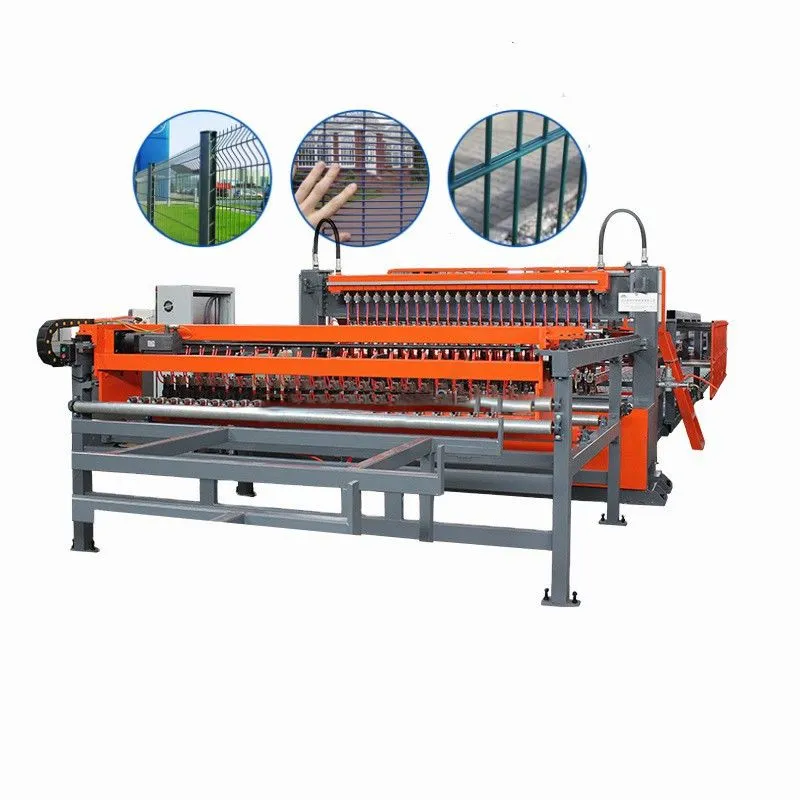
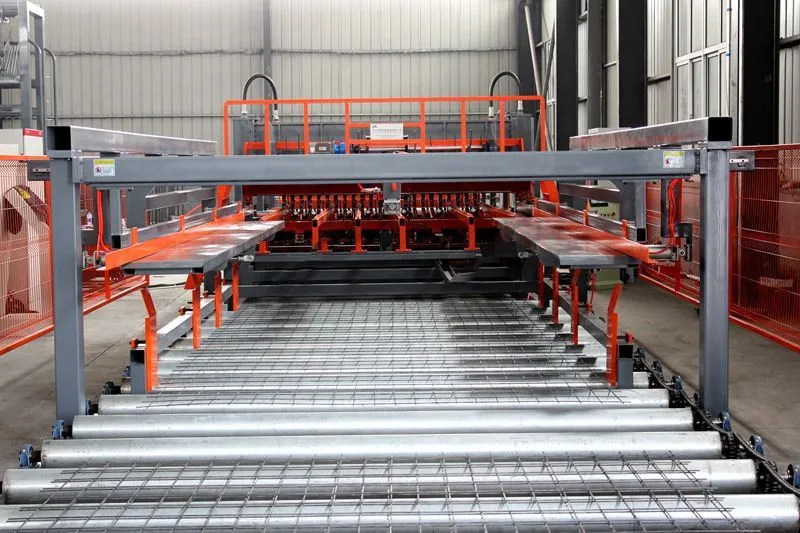
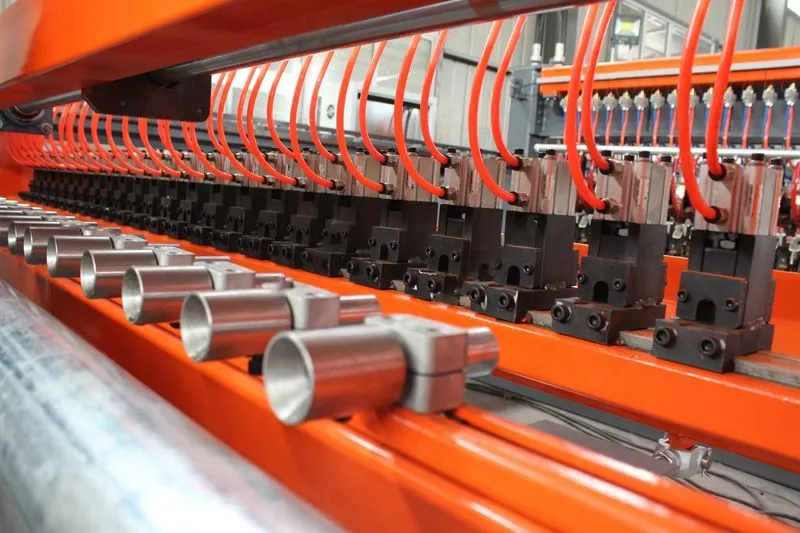
1. The Automation Journey of the Welded Wire Mesh Machine
The automation ladder in wire mesh welding has four recognizable levels. At the first level, a manual-threading welded wire mesh machine requires operators to place every longitudinal wire by hand and monitor the welding cycle closely. At the second level, semi-automatic machines automate the welding sequence but still rely on manual wire loading.
At the third level, fully automatic coil-fed machines handle feeding, welding, and cutting with minimal intervention. At the fourth level, the welded wire mesh machine becomes one station in an integrated line that also handles material handling, stacking, and quality sorting.
Each automation level of a welded wire mesh machine addresses a different bottleneck. Manual threading limits throughput to roughly 150 to 300 panels per shift and ties up three to four operators. Automatic feeding removes the threading bottleneck and raises output to 450 to 600 panels per shift.
Integrated lines shift the bottleneck from production to material handling — panels must be moved, stacked, and dispatched faster than the machine makes them. Understanding which bottleneck limits your operation is the key to choosing the right automation level.
The commercial logic of automating a welded wire mesh machine is consistent across levels: automation replaces repetitive manual work, improves consistency, and cuts per-panel labor cost. The trade-off is capital cost and reduced flexibility for very short runs. A producer of standard mesh in high volume will find automation easy to justify; a job-shop producer of custom sizes may not.
2. From Manual Threading to Coil-Fed Feeding on a Welded Wire Mesh Machine
The single largest automation step in mesh welding history was the shift from manual threading to coil-fed feeding. On a manual-threading welded wire mesh machine, longitudinal wires are cut to panel length, straightened, and placed into guide channels by hand — a setup taking 15 to 30 minutes for a standard panel width. On a coil-fed machine, wire feeds continuously from decoilers through straightening units, and setup reduces to loading coils and entering parameters.
Coil-fed feeding changed the economics of long runs on a welded wire mesh machine. A manual-threading line stops for re-threading every few hundred panels; a coil-fed welded wire mesh machine runs thousands of panels between coil changes. The resulting output gain of roughly 50% to 100% over manual threading, combined with lower operator counts, explains why coil-fed machines now dominate new equipment sales in most markets.
For buyers, the feeding configuration of a welded wire mesh machine determines both productivity and floor layout. Coil-fed machines need decoiler stands and straightening units, adding roughly 20 to 40 square meters of floor space. The trade-off is measured in labor: a coil-fed welded wire mesh machine typically runs with one operator, while a manual-threading machine needs three to four.
3. Servo Drives and Precision Indexing in a Welded Wire Mesh Machine
Servo drives represent the second major automation step in welded wire mesh machine design. Older machines used cam mechanisms and mechanical clutches to index the mesh between weld rows, which limited pitch accuracy and made changes between mesh sizes a mechanical operation. Servo-driven indexing on a modern welded wire mesh machine positions the panel electronically, holding pitch within roughly ±0.5 mm and enabling pitch changes by keypad entry rather than gear changes.
Servo control on a welded wire mesh machine improves weld quality indirectly. Consistent indexing means the mesh arrives at the electrodes at the same position on every cycle, so weld current and squeeze force produce uniform nuggets panel after panel. Cam-driven machines tend to accumulate drift over long runs; servo systems compensate electronically, and most controllers log the correction values so drift is visible before it becomes a quality problem.
The precision gain also extends the welded wire mesh machine's product range. A servo-driven welded wire mesh machine can switch between fine mesh at 25 mm pitch and coarse construction mesh at 300 mm pitch without mechanical changes, a flexibility that cam-driven designs cannot match. For producers running mixed product ranges, servo indexing is the automation feature that pays for itself fastest.
4. PLC and HMI: Programmable Welded Wire Mesh Machine Control
The programmable logic controller (PLC) and human-machine interface (HMI) turned the welded wire mesh machine from a fixed-function machine into a programmable production cell. Recipes for each mesh specification — wire diameter, pitch, weld current, weld time, panel length, and cutting offset — are stored in memory and recalled by selecting a product code on the touchscreen.
Recipe management on a welded wire mesh machine delivers two benefits that manual adjustment cannot. First, consistency: the same recipe produces the same result regardless of which operator runs the machine, eliminating the drift that comes from experienced operators adjusting by feel. Second, changeover speed: switching between two stored recipes takes minutes, versus the careful re-calibration that analog controls required.
Modern HMI systems on a welded wire mesh machine also record production data — panel counts, cycle times, fault events, and electrode usage — which feeds directly into maintenance planning and quality documentation. A welded wire mesh machine with a well-designed control system effectively becomes the factory's production data source, supporting batch traceability that construction and infrastructure customers increasingly require.
5. Sensor Integration and Automatic Fault Detection on a Welded Wire Mesh Machine
Automation's third wave on the welded wire mesh machine is sensor integration. Modern welded wire mesh machines carry sensors for wire tension, feed position, weld current, transformer temperature, and electrode condition. These sensors feed the controller in real time, and the system flags deviations before they produce defective mesh.
Wire break detection is the most valuable sensor function on a welded wire mesh machine in practice. On a manual line, a broken longitudinal wire can run for several panels before an operator notices, producing scrap mesh with a missing strand. A sensor-equipped welded wire mesh machine stops immediately when a wire breaks, logs the event, and prompts the operator to re-thread the single wire — reducing scrap on wire-break events by roughly 80% to 90% in typical installations.
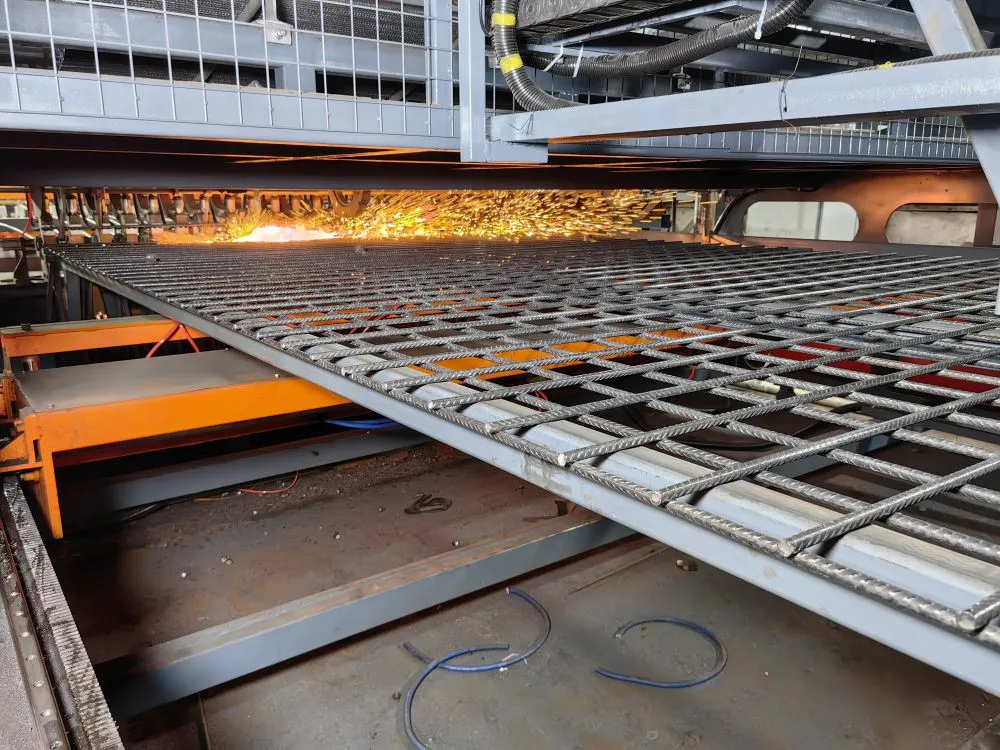
Weld current monitoring on a welded wire mesh machine serves a similar purpose for quality. The controller compares actual current against the stored recipe value on every weld, and deviations above a threshold trigger a warning or stop. This turns quality control from a post-production sampling activity into a real-time process, which is why sensor-equipped machines consistently report lower reject rates than manually monitored lines.
6. Robotic Handling Around the Welded Wire Mesh Machine: Loading, Stacking, and Palletizing
The fourth automation level adds robotic handling around the welded wire mesh machine. Panel stacking robots, palletizing arms, and automated guided vehicles (AGVs) address the material-handling bottleneck that emerges once production exceeds roughly 500 panels per shift.
A typical robotic configuration around a welded wire mesh machine uses a gantry or articulated arm to pick finished panels from the machine's output conveyor and stack them onto pallets in a programmed pattern. Stacking robots remove the two to three workers traditionally assigned to this task, and they stack panels more consistently — important for heavy construction panels where manual stacking damages edges. Palletizing cells with sensors ensure the stack stays aligned and record the weight and count of each pallet.
Robotic handling around a welded wire mesh machine is most economical when paired with high output and standardized panel sizes. Producers running construction mesh at 400 or more panels per shift commonly recover a stacking robot's cost within 18 to 30 months through labor savings and reduced edge damage. Producers with small runs and varied panel sizes often find manual stacking remains the more flexible — and cheaper — option.
7. Integrated Production Lines Built Around the Welded Wire Mesh Machine
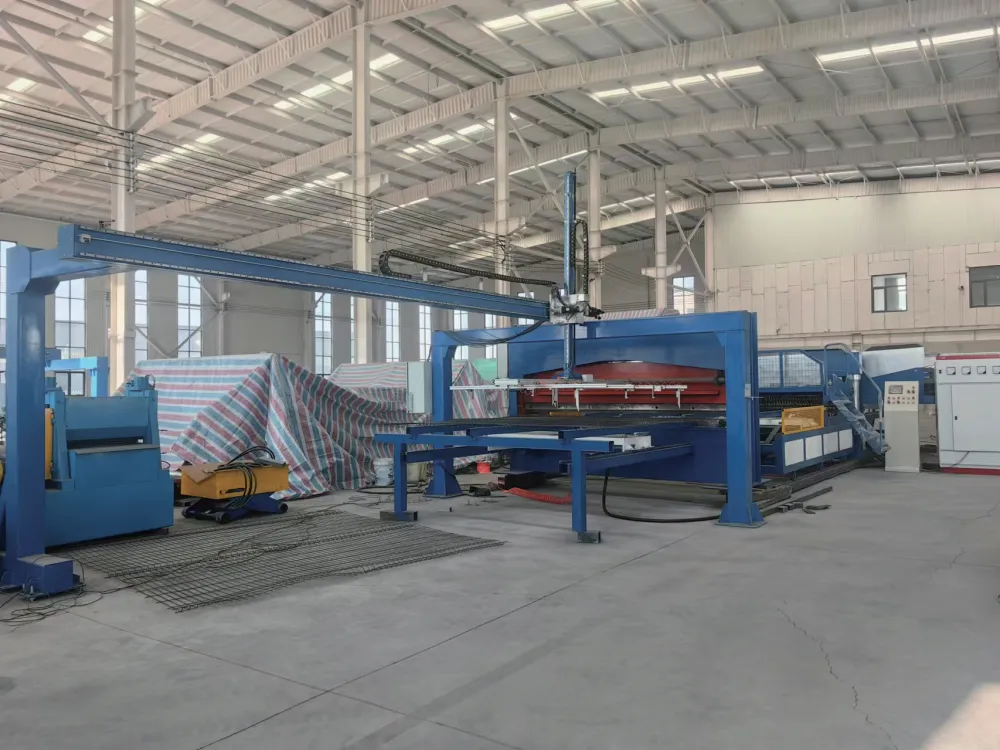
At the top of the automation ladder, the welded wire mesh machine functions as the core station in an integrated production line that starts with wire coils and ends with palletized, wrapped product ready for dispatch. Between the decoilers and the palletizer sit the straightening units, the welding station, the cutting unit, and an automatic stacking and bundling system, all coordinated by a single controller.
Integrated lines deliver their value in throughput and labor productivity. A fully integrated configuration producing fencing mesh typically runs 450 to 600 panels per shift with two operators, versus six to eight operators for the equivalent output on manual equipment. Changeovers between standard sizes take 20 to 45 minutes, and the line runs unattended through scheduled breaks when equipped with automatic fault recovery.
The investment profile of an integrated welded wire mesh machine line is correspondingly higher. Integrated lines built around a heavy-duty welded wire mesh machine range from roughly $150,000 to $500,000 depending on width, wire range, and the degree of robotic integration. Buyers should size the integration to the product mix — a line that never runs long enough to justify robotic stacking is capital tied up unnecessarily.
8. Data Logging and Remote Support for Welded Wire Mesh Machines
The latest automation trend for welded wire mesh machines is connectivity. Welded wire mesh machines with network interfaces log production data to a local server or cloud platform, and manufacturers use that data for remote diagnostics, preventive maintenance, and process improvement.
Remote support changes the after-sales relationship for welded wire mesh machine buyers. When a fault occurs, the operator sends a diagnostic snapshot — current alarms, parameter values, and recent event history — to the manufacturer, who can often identify the cause without a site visit. This matters most for buyers in markets far from the factory, where a service call costs weeks of lead time. Hebei Jinlongyu Import And Export Trade Co., Ltd. has shipped welded wire mesh machines to more than eight countries and uses remote diagnostics to resolve a substantial share of post-installation issues without dispatching an engineer.
Data logging on a welded wire mesh machine also supports continuous improvement. Comparing weld current trends across weeks reveals electrode wear patterns and transformer performance, letting maintenance act before failures occur. For quality-conscious industries, the logged data becomes the audit trail that demonstrates consistent production to customers and certification bodies.
9. What Automation Means for Buyers
For buyers, the automation trend reshapes the welded wire mesh machine purchasing decision in three ways. First, the capability gap between a basic and an automated welded wire mesh machine has widened, so the choice must be made against the expected production mix, not just the budget. Second, operator skill requirements have shifted from manual dexterity to controller literacy — training plans must cover the PLC and HMI as core content. Third, after-sales support quality matters more, because automated equipment depends on software updates, spare sensors, and remote diagnostics.
Jinlongyu Trading recommends that buyers request a demonstration of the machine's automation features — recipe recall, fault diagnostics, and data export — during the factory visit, not just a sample run. The demonstration reveals how mature the control software is, which correlates strongly with reliability in the field.
The automation trajectory described here is not a prediction about the future; it is the current state of the market. New welded wire mesh machines sold today carry coil-fed feeding, servo indexing, PLC control, and sensor monitoring as standard features in most configurations. The practical question for each buyer is not whether to automate, but at which level — and the answer is determined by volume, product mix, labor cost, and the cost of downtime.
10. Frequently Asked Questions
10.1 Is a fully automatic welded wire mesh machine worth the higher cost?
For most high-volume producers, yes. A fully automatic coil-fed welded wire mesh machine typically costs 40% to 70% more than a semi-automatic unit but produces roughly 50% more panels per shift with one third to one half the operators. When weekly volume exceeds roughly 2,000 to 3,000 panels and labor costs are above $8 per hour, the payback on the premium typically falls between 18 and 30 months. For low-volume producers with frequent specification changes, the flexibility of a semi-automatic machine may deliver better returns.
10.2 Can existing welded wire mesh machines be retrofitted with automation?
Partial retrofits are possible, but they have limits. Adding sensors for wire break detection and weld current monitoring is straightforward on most machines and delivers immediate scrap savings. Retrofitting coil-fed feeding, servo indexing, or robotic handling is more involved, because these systems interact with the machine's frame, control architecture, and safety systems. Retrofits typically cost 50% to 80% of the equivalent factory-installed features, so buyers should compare retrofit cost against replacing the machine when automation needs are extensive.
10.3 What training do operators need for automated welding lines?
Automated welded wire mesh machine operation shifts from manual skills to controller skills. Operators need training on the PLC and HMI: navigating recipes, adjusting parameters within limits, reading fault messages, and performing routine diagnostics. Most manufacturers provide one to two weeks of on-site training during commissioning, plus manuals and video guides. Hebei Jinlongyu Import & Export Trading includes operator training in its installation package and offers refresher training remotely through the machine's network connection.
10.4 How does automation affect maintenance requirements?
Automation changes the maintenance mix rather than reducing it. A fully automatic welded wire mesh machine still needs electrode dressing, transformer contact cleaning, and lubrication, but adds maintenance for sensors, servo drives, and control electronics. Servo drives and sensors are typically more reliable than the mechanical components they replace, so total maintenance hours often stay flat or decline.
The difference is that automated machines log component usage, enabling preventive maintenance — replacing electrodes and sensors before failure — rather than reactive repair. This shifts maintenance from a cost center to a planning activity, and Hebei Jinlongyu documents the full schedule in the machine manual, covering both the welding core and the automation components.
Recently Posted
-
Welded Wire Mesh Machines for Construction Rebar Cages: Applications in Building and Infrastructure
September 4, 2026A few years ago, a contractor on a highway overpass project in Southeast Asia discovered that hand-tied reinforcement cages were c Read More
 -
QC Inspection Checklist for Wire Mesh Welding Machines Before Shipment
September 4, 2026A while back, a buyer in Africa took delivery of a welded wire mesh machine and discovered on installation day that the transforme Read More
 -
Fully Automatic vs Semi-Automatic Welded Wire Mesh Machine: Output, Labor, and Cost Comparison
September 3, 2026Not long ago, a mesh producer in Southeast Asia doubled his factory floor but kept the same two semi-automatic welded wire mesh ma Read More
 -
What Is a Welded Wire Mesh Machine: Types and How It Works
September 2, 2026Some time ago, a construction materials distributor in the Middle East ordered 2,000 welded mesh panels from a supplier that had n Read More

Contact Us
Recommended Products
-
 Welded Wire Panel Machine for Industrial Shelf and Partition ManufacturingNegotiableMOQ: 1 Set
 -
CNC Servo Straightening and Cutting Machine for Steel, Iron, and Stainless Steel WireNegotiableMOQ: 1 Set
-
Professional Steel Panel Welded Wire Mesh Reinforcing Mesh Production LineNegotiableMOQ: 1 Set
-
Automatic Roll Welded Wire Mesh Welding Machine for Panel and Roll MeshNegotiableMOQ: 1 Set
-
Stainless Steel Welded Wire Mesh Machine for Fencing ProductionNegotiableMOQ: 1 Set
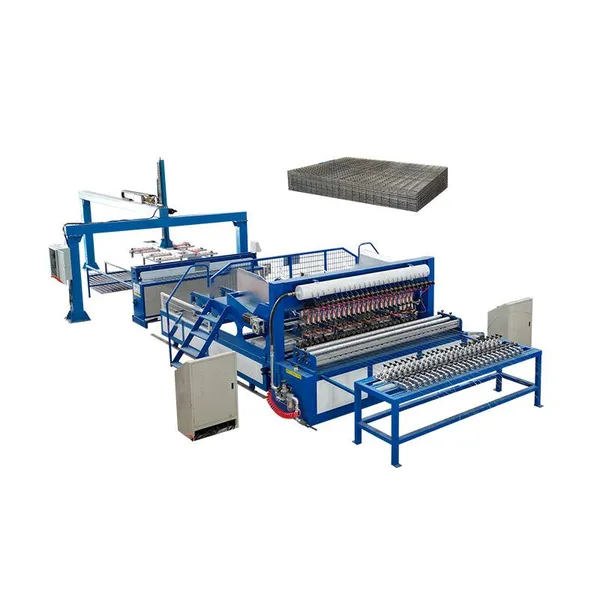
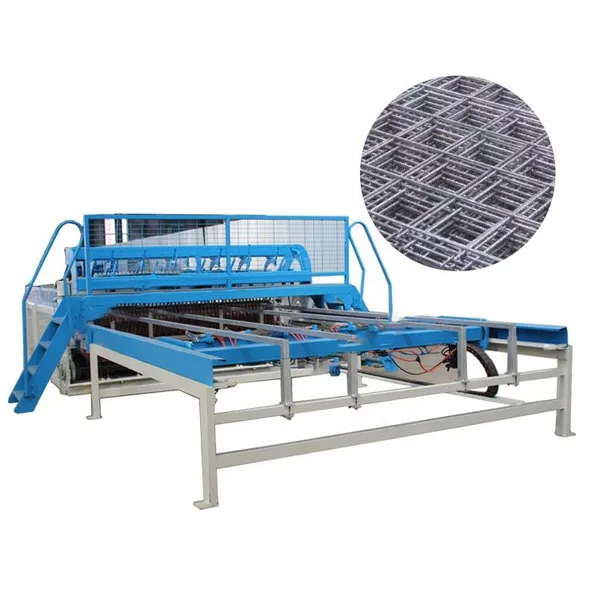
-
Full Automatic PLC Control 5-12mm Wire Mesh Fence Welding EquipmentNegotiableMOQ: 1 Set
-
PLC Controlled Fully Automatic Chain Link Fence Machine for High-Speed ProductionNegotiableMOQ: 1 Set
-
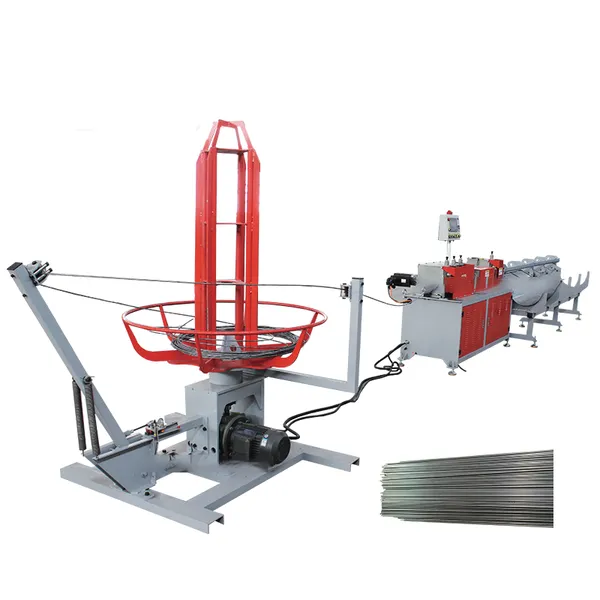
Automatic Mechanical Steel Wire Straightening and Cutting Machine for Industrial UseNegotiableMOQ: 1 Set
-
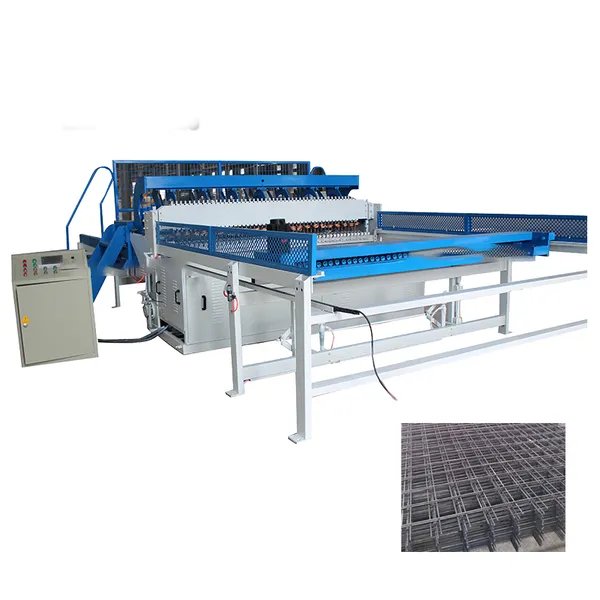
Factory Price Galvanized Steel Wire Mesh Welding Machine Automatic Welded Mesh MachineNegotiableMOQ: 1 Set
-
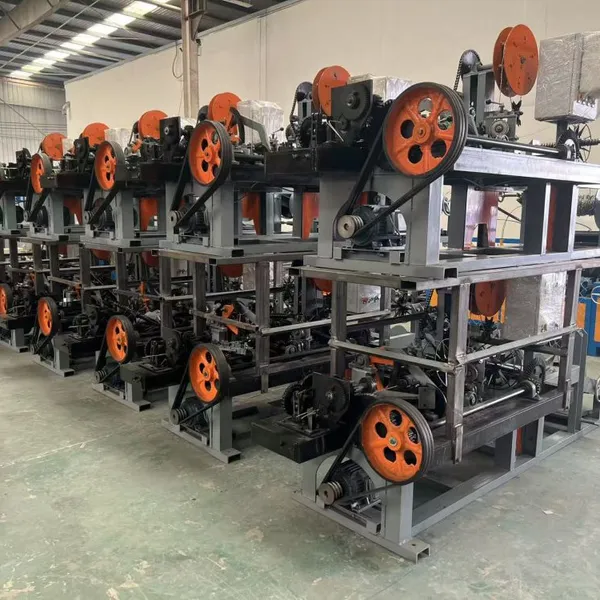
Razor Barbed Wire Making Machine/Razor Wire Fence for ProtectionNegotiableMOQ: 1 Set
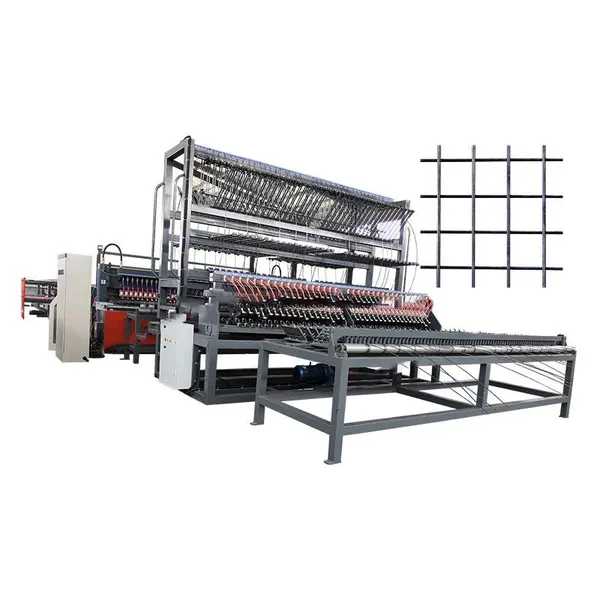
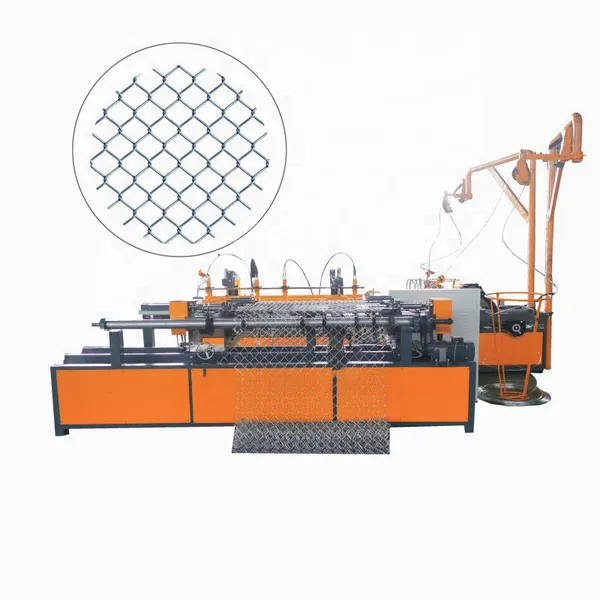
-
Durable Industrial Welded Mesh Machine for Construction Fence ManufacturingNegotiableMOQ: 1 Set
-
Fence Welding Machine Bangladesh 4-Head Spot Welder 0.8-3mm Steel Wire 20KVANegotiableMOQ: 1 Unit
-
Reliable Bangladesh Fence Welding Machine Factory Direct Support Free Spare Parts KitNegotiableMOQ: 1 Unit
-
For Bangladesh Construction Site Fence Welding Machine Heavy Duty Steel Frame 12 Months WarrantyNegotiableMOQ: 1 Unit
-
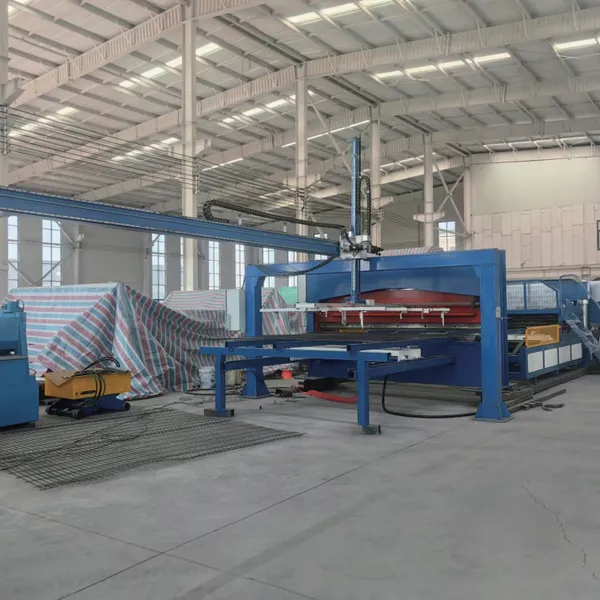
Bangladesh Farm Fence Welding Machine Durable for Outdoor Perimeter Fencing 1 Year ServiceNegotiableMOQ: 1 Unit
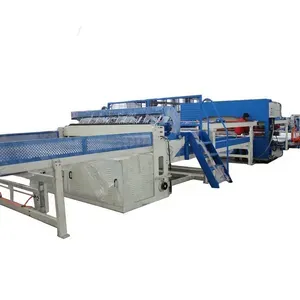
-
Bangladesh Fence Panel Welder 2000x3000mm Capacity 30-50 Welds/Minute 380VNegotiableMOQ: 1 Unit
-
220V Semi-Auto Fence Welder for Bangladesh 2-6mm Wire Diameter PLC ControlNegotiableMOQ: 1 Unit
-
Bangladesh Fence Welding Machine 380V 3-Phase Automatic Wire Feeder 50-100 M/Min SpeedNegotiableMOQ: 1 Unit
-
Bangladesh Fence Mesh Welding Machine 1500mm Width Servo Motor Driven 60HzNegotiableMOQ: 1 Unit
-
Bangladesh Fence Welder With 2-Year Warranty On-Site Training Available 220V/380VNegotiableMOQ: 1 Unit

