

 Business License

Welded Wire Mesh Machine Specifications: Wire Diameter, Mesh Size, and Welding Speed Explained
A fabrication shop in North Africa ordered a welded wire mesh machine in 2020 based on a single-page specification sheet listing "wire diameter: 3–8 mm" and "welding speed: 60 welds/min." The machine arrived, was installed, and within the first week the operators discovered that the 8 mm maximum applied only to longitudinal wires — the transverse wire limit was 6 mm. The "60 welds/min" speed rating assumed 4 mm wire with 200 mm mesh spacing; at 8 mm wire with 50 mm spacing, the real-world speed was closer to 22 welds per minute.
Specification sheets for welded wire mesh machines are written to sell, not to inform. Numbers are cherry-picked from ideal test conditions that rarely match production reality. This article explains what each specification category actually means, how the numbers interact with each other, and how to verify supplier claims before committing to a welded wire mesh machine purchase.
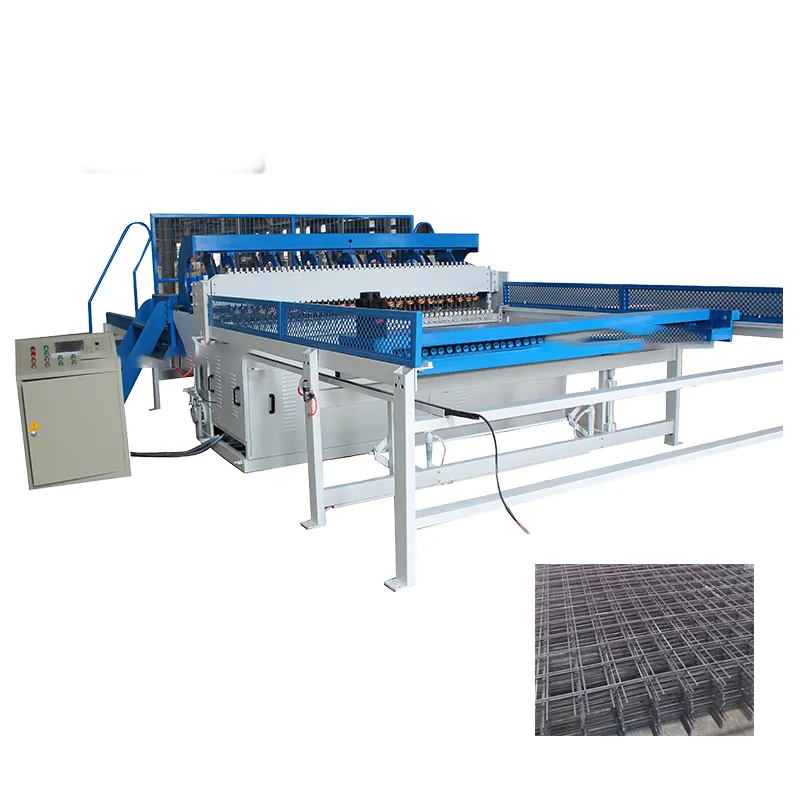
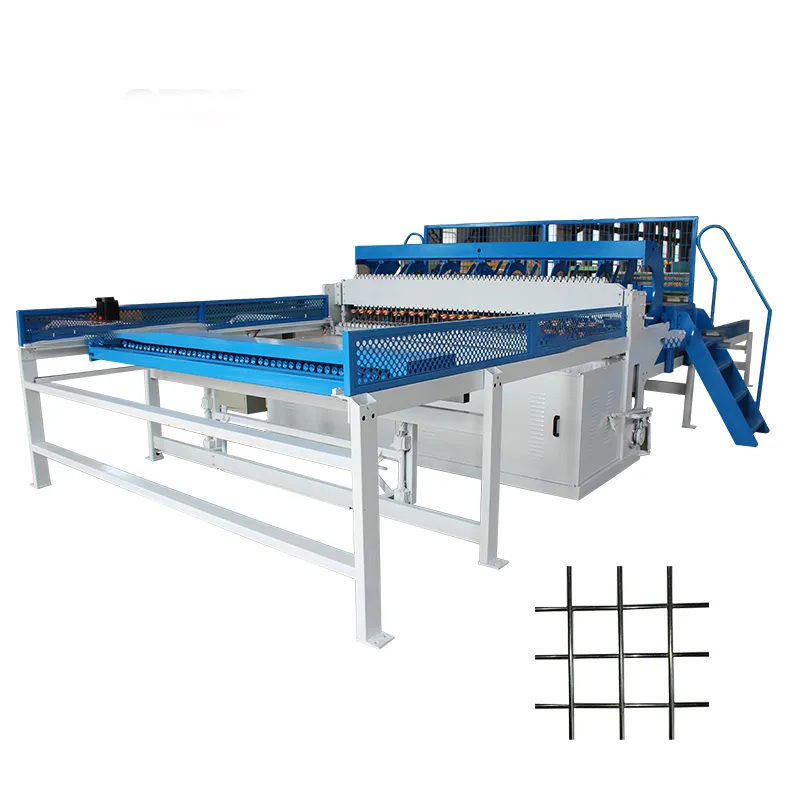
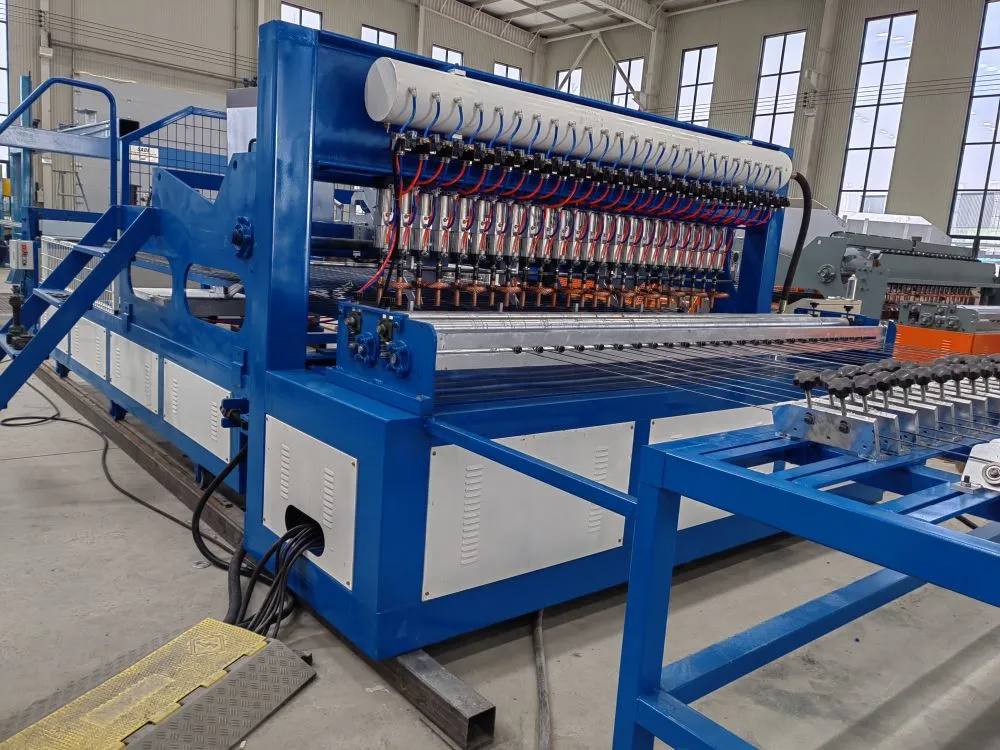
1. Wire Diameter Specifications on a Welded Wire Mesh Machine
The wire diameter range listed on a welded wire mesh machine spec sheet is almost always stated as a minimum-to-maximum range — for example, 3 mm to 8 mm. What is rarely stated is whether the maximum applies equally to longitudinal and transverse wires, or whether the range assumes both wires are the same diameter in each weld. A welded wire mesh machine that can weld 8 mm longitudinal wire with 6 mm transverse wire may not be able to weld 8 mm wire in both directions simultaneously because the transformer must deliver current through two full-diameter wires at every intersection.
The practical working range of a welded wire mesh machine is typically one notch below the listed maximum. If the spec sheet says 8 mm, plan production around 6 mm to 7 mm for consistent quality. The reason is that electrode force and welding current requirements increase non-linearly with diameter. Moving from 6 mm to 8 mm wire increases the required welding current by roughly 75% — from approximately 8 kA to about 14 kA per weld point — because the contact area and the steel mass requiring heat both grow with the square of the diameter.
2. Mesh Size Specifications and Adjustment Range
Mesh size on a welded wire mesh machine refers to the center-to-center spacing between longitudinal wires and between transverse wires. The specification sheet typically lists a minimum and maximum pitch for each direction — for example, longitudinal pitch 50 mm to 300 mm, transverse pitch 25 mm to 200 mm. These numbers define the machine's product envelope, but the adjustment mechanism determines how many distinct mesh sizes you can practically produce.
Continuous pitch adjustment via lead screws or servo-driven positioning allows any mesh size within the range. This is standard on mid-range and high-end welded wire mesh machines. Stepped adjustment using fixed slots limits output to specific grid sizes and is more common on entry-level machines. A welded wire mesh machine with stepped adjustment set at 50 mm, 100 mm, 150 mm, and 200 mm cannot produce 75 mm or 125 mm grids — a limitation that matters if your customers request non-standard mesh sizes.
Another specification to verify is the minimum edge distance — the spacing from the panel edge to the first wire. Some welded wire mesh machines specify a minimum of 40 mm to 50 mm. If your panels require 25 mm edge margins, the machine must either support that directly or require secondary cutting, which adds labor and material waste. Hebei Jinlongyu Import And Export Trade Co., Ltd. lists both pitch range and minimum edge distance on its specification documents for each welded wire mesh machine model.
3. Welding Speed: Rated vs Effective Throughput
The welding speed specification on a welded wire mesh machine is typically stated as "welds per minute" or "rows per minute." A row is one complete pass of the transverse wire welding head, which may involve multiple simultaneous welds depending on the number of longitudinal wires. If a welded wire mesh machine with 12 longitudinal wires completes one transverse row with 12 simultaneous welds, the spec sheet may report either "12 welds per row" or count it as "1 row per minute" — two very different numbers describing the same machine.
Actual throughput depends on four interacting parameters: welding cycle time, wire loading time, mesh size changeover frequency, and electrode dressing downtime. The table below shows how effective throughput compares to rated speed for different machine classes.
| Machine Class | Rated Speed (Rows/Min) | Effective Speed (8-Hr Shift) | Net Efficiency |
|---|---|---|---|
| Entry-level manual feed | 25–35 | 15–22 | Roughly 60%–65% |
| Mid-range semi-automatic | 40–60 | 28–45 | Roughly 70%–75% |
| High-speed automatic | 70–100 | 55–80 | Roughly 78%–82% |
| Full coil-fed automatic | 100–140 | 80–115 | Roughly 80%–85% |
When evaluating a welded wire mesh machine specification, ask the supplier for the effective speed at your target wire diameter and mesh size, based on documented production data. A rated speed of 80 rows per minute on 4 mm wire means very little if your production runs 8 mm wire at 100 mm pitch.
4. Welding Transformer Specifications
The welding transformer on a welded wire mesh machine is rated in kVA at a specified duty cycle — the percentage of time the transformer can deliver full current without overheating. A transformer rated at 150 kVA at 50% duty cycle can deliver 150 kVA for 30 seconds out of every 60 seconds, or proportionally less for longer duty periods. For continuous production, the effective continuous rating is roughly 70% of the 50% duty cycle rating — so a 150 kVA transformer at 50% duty provides roughly 105 kVA of continuous welding power.
The transformer specification interacts directly with wire diameter and simultaneous weld count. Each weld point on a welded wire mesh machine requires roughly 6 to 14 kA of current, depending on wire diameter. A machine welding 10 longitudinal wires simultaneously — meaning 10 weld points fire at once — needs roughly 100 to 140 kA of total instantaneous current. If the transformer is undersized, welding current decreases at each weld point and weld strength becomes inconsistent. Jinlongyu Trading specifies transformer ratings with both the kVA value at 50% duty and the maximum simultaneous weld count, allowing buyers to verify whether the transformer matches their production requirements.
5. Electrode Specifications and Lifecycle
Electrode specifications on a welded wire mesh machine include material grade, cooling method, and dressing interval. Copper-chromium-zirconium electrodes (CuCrZr) provide the best combination of electrical conductivity and wear resistance, lasting roughly 15,000 to 30,000 welds between dressings. Water-cooled electrodes on a welded wire mesh machine extend this to roughly 25,000 to 45,000 welds by maintaining lower electrode tip temperatures, which reduces softening and mushrooming.
Electrode force is another specification to check — typically 1.5 to 4.0 kN per electrode. Force must be adequate for the largest wire diameter the welded wire mesh machine will weld. Insufficient force causes arcing before full contact, burning the wire surface and creating weak, brittle welds. Individual force adjustment per electrode is specified on higher-end machines; gang adjustment is standard on entry-level models. A welded wire mesh machine with individually adjustable electrodes costs more upfront but reduces electrode consumption by roughly 15% to 25% over a year of multi-diameter production because each electrode can be set for optimal force on its specific wire diameter combination.
6. Machine Dimensions, Weight, and Installation Requirements
The physical specifications of a welded wire mesh machine — overall length, width, height, and weight — determine shipping cost, foundation requirements, and factory floor layout. A mid-range welded wire mesh machine typically measures roughly 8 to 15 meters in length, 2 to 4 meters in width, and weighs 3 to 8 tons. Fully automatic lines with integrated straightening, welding, and stacking can exceed 20 meters and 15 tons.
Foundation requirements are often overlooked in specification reviews. A welded wire mesh machine generates significant dynamic loads during welding — the impact of electrodes striking wire at 60 to 100 cycles per minute transmits vibration through the frame into the floor. Machines above roughly 5 tons typically require a reinforced concrete foundation pad 200 mm to 300 mm thick, with anchor bolts cast in place. Skimping on the foundation leads to frame movement, electrode misalignment, and weld quality drift over time. Hebei Jinlongyu Import & Export Trading provides foundation drawings and installation requirements as part of the specification package for each welded wire mesh machine.
7. Electrical and Control System Specifications
The electrical specification of a welded wire mesh machine includes input voltage, phase, frequency, and total connected load. Most machines require three-phase power at 380V to 440V, 50 Hz or 60 Hz. The total connected load includes the welding transformer, drive motors, hydraulic pump (if equipped), and control system — typically 100 to 250 kVA for mid-range machines. The specification sheet should also list the inrush current, which can be 3 to 5 times the rated continuous current for the first few cycles when the transformer energizes.
The control system specification on a modern welded wire mesh machine should include PLC brand and model, touchscreen size and resolution, and whether the controller supports recipe storage for multiple mesh specifications. A PLC that stores 50 to 100 recipe slots allows operators to switch mesh sizes by loading a stored program rather than manually adjusting timers and current settings. This reduces changeover time from roughly 45 minutes to under 10 minutes on a well-specified welded wire mesh machine.
8. How to Verify a Welded Wire Mesh Machine Specification
A specification sheet is a starting point, not a commitment. Before purchasing a welded wire mesh machine, verify at least three specifications through direct observation or third-party confirmation. Request a live production demonstration running your target wire diameter and mesh size — not a pre-set demo on the supplier's most forgiving material. Measure actual cycle time with a stopwatch over at least 20 consecutive cycles. Check electrode force with a load cell on at least three electrode positions.
Ask for the serial number of a welded wire mesh machine shipped to a customer with similar production requirements within the past 12 months, and request permission to contact that customer. If the supplier cannot provide a reference, treat this as a neutral signal — not necessarily a red flag, but a reason to be more thorough with your other verification steps. A supplier confident in their welded wire mesh machine's performance will have customers willing to share their experience.
9. Frequently Asked Questions
9.1 What does "duty cycle" mean on a welded wire mesh machine specification?
Duty cycle is the percentage of a 60-second period that the welding transformer can operate at its rated output without exceeding its temperature limit. A 50% duty cycle means the transformer can deliver full rated current for 30 seconds, then must rest for 30 seconds. For a welded wire mesh machine running continuously, the effective continuous rating is roughly 70% of the 50% duty cycle value. If the specification lists 150 kVA at 50% duty, the transformer can deliver roughly 105 kVA continuously. Always verify the duty cycle basis when comparing transformer ratings between different welded wire mesh machine suppliers.
9.2 How do I know if a welded wire mesh machine specification sheet is accurate?
Three checks provide good confidence: request a video of the machine welding your target wire diameter and mesh size for at least 10 consecutive minutes without editing; ask for a load cell measurement of electrode force at three positions during a live demonstration; and verify the transformer rating plate matches the specification sheet. Discrepancies between any of these and the printed spec are reason to investigate further. Hebei Jinlongyu Import & Export Trading provides specification verification documentation including transformer nameplate photos and production demonstration videos as standard practice.
9.3 Can I upgrade a welded wire mesh machine later if my production needs change?
Some specifications can be upgraded, others are fixed by the machine's physical design. Wire diameter capacity is typically fixed by the transformer rating and electrode force capacity — upgrading either requires major component replacement. Mesh size range is limited by the pitch adjustment mechanism's physical travel. Control systems can be retrofitted from relay to PLC, though the cost — roughly $5,000 to $12,000 — may approach 20% to 30% of the original machine cost. Feeding automation can usually be added later, making a semi-automatic welded wire mesh machine a practical stepping stone toward full automation.
9.4 What is the difference between single-phase and three-phase welded wire mesh machines?
Single-phase welded wire mesh machines are limited to roughly 2 to 4 electrodes welding wire up to about 5 mm diameter, with a transformer rating of roughly 25 to 50 kVA. They are suitable for small workshops producing light mesh for cages, shelves, and light fencing. Three-phase welded wire mesh machines can support 6 to 20 or more electrodes welding wire up to 12 mm to 16 mm diameter, with transformers up to 250 kVA or higher. For any production above roughly 100 panels per day, or any wire diameter above 6 mm, a three-phase welded wire mesh machine is the practical minimum.
Recently Posted
-
Hebei Jinlongyu: Full-Category Wire Mesh Machinery from China's Hebei Manufacturing Hub
August 13, 2026When a buyer searches for wire mesh machinery suppliers in China, the search results are dominated by companies clustered in one p Read More
 -
How to Choose a Welded Wire Mesh Machine: 8 Factors Buyers Should Evaluate
August 11, 2026A construction materials supplier in the Middle East spent roughly $38,000 on a welded wire mesh machine in 2021. The machine was Read More
 -
Mechanical vs Pneumatic Rebar Mesh Welding Machine: Which One Fits Your Production
August 10, 2026In 2022, a rebar cage fabrication shop in Southeast Asia invested roughly $45,000 in a pneumatic rebar mesh welding machine, expec
Read More -
What Is a Razor Wire Machine: Working Principle and Key Components
August 7, 2026In 2021, a warehouse facility in Southeast Asia spent roughly $18,000 on perimeter security fencing. Within fourteen months, secti Read More

Contact Us
Recommended Products
-
 Welded Wire Panel Machine for Industrial Shelf and Partition ManufacturingNegotiableMOQ: 1 Set
 -
CNC Servo Straightening and Cutting Machine for Steel, Iron, and Stainless Steel WireNegotiableMOQ: 1 Set
-
Professional Steel Panel Welded Wire Mesh Reinforcing Mesh Production LineNegotiableMOQ: 1 Set
-
Automatic Roll Welded Wire Mesh Welding Machine for Panel and Roll MeshNegotiableMOQ: 1 Set
-
Stainless Steel Welded Wire Mesh Machine for Fencing ProductionNegotiableMOQ: 1 Set
-
Full Automatic PLC Control 5-12mm Wire Mesh Fence Welding EquipmentNegotiableMOQ: 1 Set
-
PLC Controlled Fully Automatic Chain Link Fence Machine for High-Speed ProductionNegotiableMOQ: 1 Set
-
Automatic Mechanical Steel Wire Straightening and Cutting Machine for Industrial UseNegotiableMOQ: 1 Set
-
Factory Price Galvanized Steel Wire Mesh Welding Machine Automatic Welded Mesh MachineNegotiableMOQ: 1 Set
-
Razor Barbed Wire Making Machine/Razor Wire Fence for ProtectionNegotiableMOQ: 1 Set
-
Durable Industrial Welded Mesh Machine for Construction Fence ManufacturingNegotiableMOQ: 1 Set
-
Fence Welding Machine Bangladesh 4-Head Spot Welder 0.8-3mm Steel Wire 20KVANegotiableMOQ: 1 Unit
-
Reliable Bangladesh Fence Welding Machine Factory Direct Support Free Spare Parts KitNegotiableMOQ: 1 Unit
-
For Bangladesh Construction Site Fence Welding Machine Heavy Duty Steel Frame 12 Months WarrantyNegotiableMOQ: 1 Unit
-
Bangladesh Farm Fence Welding Machine Durable for Outdoor Perimeter Fencing 1 Year ServiceNegotiableMOQ: 1 Unit
-
Bangladesh Fence Panel Welder 2000x3000mm Capacity 30-50 Welds/Minute 380VNegotiableMOQ: 1 Unit
-
220V Semi-Auto Fence Welder for Bangladesh 2-6mm Wire Diameter PLC ControlNegotiableMOQ: 1 Unit
-
Bangladesh Fence Welding Machine 380V 3-Phase Automatic Wire Feeder 50-100 M/Min SpeedNegotiableMOQ: 1 Unit
-
Bangladesh Fence Mesh Welding Machine 1500mm Width Servo Motor Driven 60HzNegotiableMOQ: 1 Unit
-
Bangladesh Fence Welder With 2-Year Warranty On-Site Training Available 220V/380VNegotiableMOQ: 1 Unit

